





What's Happening?
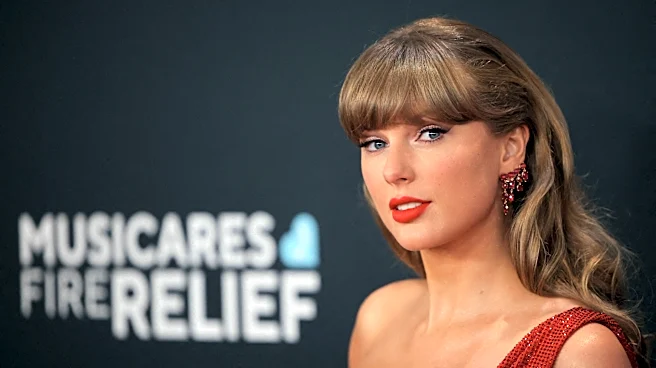
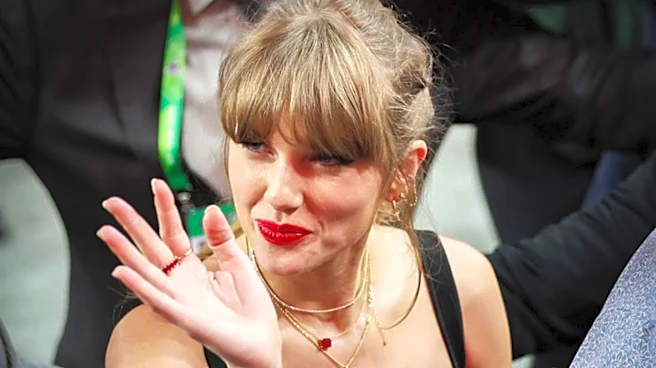
Taylor Swift and Travis Kelce's recent wedding at Madison Square Garden has sparked a wave of philanthropy among Swift's fanbase, known as Swifties. Over two hundred fans gathered at P.S. 20 Anna Silver on the Lower East Side to pack more than 2,200 backpacks
for students in need across New York City. This event was organized by New York Cares, one of the 20 beneficiaries of the couple's $26 million charitable contributions. The event capitalized on the enthusiasm of Swift's fans, who were encouraged to donate in amounts symbolic to Swift's career, such as $13 and $198.90. The initiative has not only raised significant funds but also converted many fans into first-time volunteers, contributing to New York Cares' goal of reaching over 70,000 volunteers this year.
Why It's Important?
The philanthropic activities inspired by Taylor Swift's wedding highlight the potential of celebrity influence in driving social change. By engaging her fanbase in charitable activities, Swift has helped address the increasing demand for volunteer support in New York City's nonprofit sector. Organizations like New York Cares, which have faced budget cuts and increased client needs, benefit from the influx of volunteers and donations. This trend underscores the power of celebrity-driven initiatives to mobilize resources and support for community causes, potentially setting a precedent for other celebrities to leverage their influence for social good.
What's Next?
As New York Cares continues to harness the enthusiasm of Swift's fanbase, the organization aims to expand its volunteer base and increase its impact on the community. The success of this initiative may encourage other nonprofits to collaborate with celebrities to boost engagement and support. Additionally, the ongoing participation of Swifties in charitable activities could inspire similar movements among other fan communities, further amplifying the impact of celebrity philanthropy.
Beyond the Headlines
The phenomenon of fandom-led philanthropy raises questions about the sustainability of such initiatives and their long-term impact on the nonprofit sector. While celebrity influence can drive immediate engagement, it remains to be seen whether this enthusiasm can be maintained over time. Furthermore, the reliance on celebrity-driven campaigns may overshadow the efforts of smaller, less visible organizations that lack such high-profile endorsements. Nonetheless, the current trend demonstrates the potential for innovative approaches to philanthropy that leverage popular culture to address societal needs.