








What's Happening?
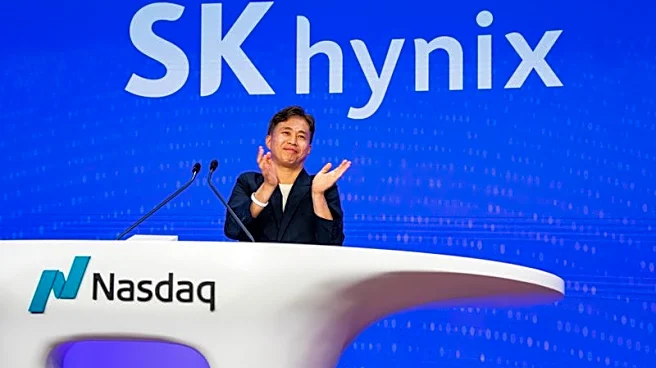
SK Hynix, a South Korean memory chipmaker, has made a significant debut on Wall Street with its shares rising by 13.1%. This comes at a time when the demand for memory chips is surging due to the growing interest in artificial intelligence technologies.
The company priced its American depositary receipts (ADRs) at $149 each, which opened at $170 and closed at $168.49. The offering of 177.9 million ADRs raised $26.5 billion, marking the largest initial share sale in the U.S. by a foreign company. SK Hynix is capitalizing on the increasing demand for AI, having recently partnered with Nvidia for advanced memory chips. The U.S. is SK Hynix's largest market, accounting for 68.8% of its revenue last year, and the company plans to expand by building its first U.S. production facility in Indiana.
Why It's Important?
The debut of SK Hynix on Wall Street highlights the growing influence of chipmakers in the tech sector, driven by the demand for AI technologies. This surge in demand has led to increased profits for chipmakers, with memory chips becoming more expensive as supply struggles to keep up. The company's expansion plans in the U.S. indicate a strategic move to strengthen its presence in its largest market. The success of SK Hynix's IPO reflects the broader trend of tech companies capitalizing on AI demand, which has been a significant driver of stock market growth. This development underscores the importance of the semiconductor industry in the global economy, particularly in the context of technological advancements.
What's Next?
SK Hynix's expansion plans in the U.S. include building a production facility in Indiana, which could further solidify its market position. The company's partnership with Nvidia suggests continued collaboration in developing advanced memory chips for AI infrastructure. As demand for AI technologies continues to grow, SK Hynix may explore additional partnerships and investments to enhance its capabilities. The company's strategic moves could influence other chipmakers to expand their operations in the U.S., potentially leading to increased competition and innovation in the semiconductor industry.