




What's Happening?
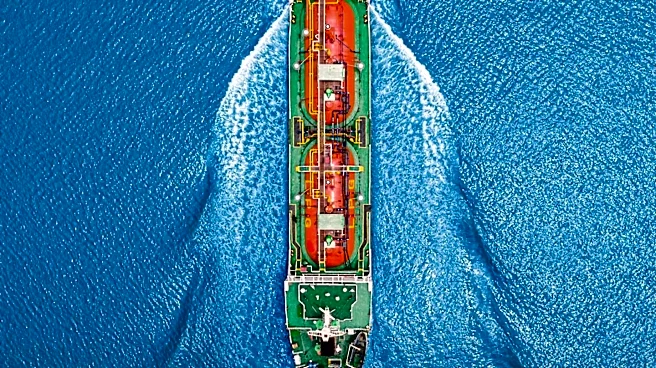
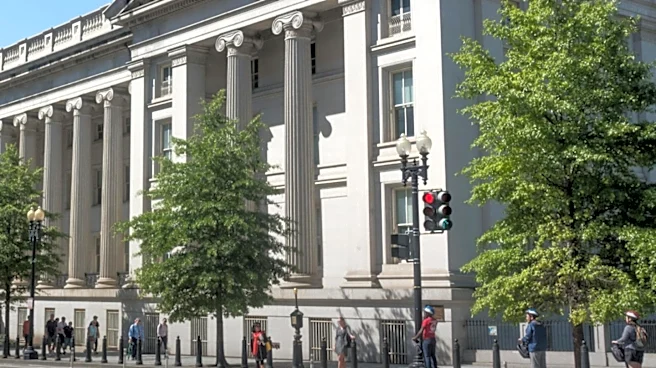
U.S. Treasury yields remained steady as investors assessed the potential impact of a deal to unlock the Strait of Hormuz and weaker-than-expected jobs data. The 10-year Treasury note yield, a key benchmark for various loans, was slightly lower at 4.613%.
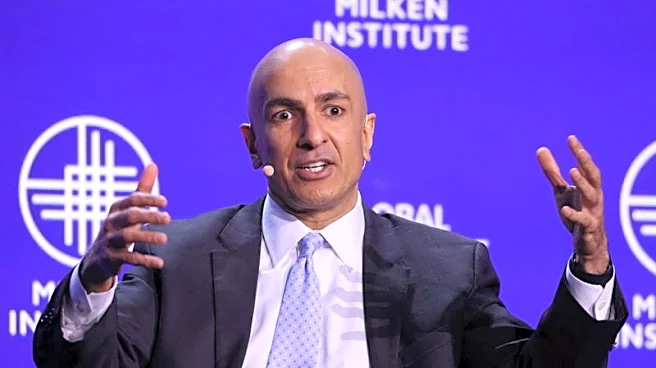
Minneapolis Federal Reserve President Neel Kashkari suggested that it might be time to raise interest rates, possibly starting in September. Meanwhile, ADP reported a slowdown in nonfarm job growth, with private companies adding only 44,000 positions in July, below expectations. This comes ahead of the Bureau of Labor Statistics' upcoming report, which is expected to show an increase of 83,000 jobs. The potential deal to allow commercial ships through the Strait of Hormuz has already influenced U.S. government bond yields and crude oil prices.
Why It's Important?
The stability of U.S. Treasury yields is crucial for the broader economic landscape, affecting everything from mortgage rates to credit card debt. The potential deal regarding the Strait of Hormuz could ease geopolitical tensions, impacting oil prices and, consequently, inflation. The Federal Reserve's consideration of raising interest rates reflects ongoing economic assessments, balancing corporate earnings and consumer resilience against labor market data. The weaker job growth figures could influence monetary policy decisions, affecting borrowing costs for businesses and consumers. The outcome of these developments will have significant implications for economic stakeholders, including investors, policymakers, and the general public.
What's Next?
Investors and policymakers will closely monitor the Bureau of Labor Statistics' upcoming nonfarm payrolls data for further insights into the labor market. The Federal Reserve's next meeting in September could see discussions on interest rate adjustments, influenced by economic indicators and geopolitical developments. The potential deal to unlock the Strait of Hormuz will also be watched for its impact on oil prices and inflation. Stakeholders, including businesses and consumers, will need to adapt to any changes in borrowing costs and economic conditions.