





What's Happening?
Amaroq, a mine development company, has commenced drilling at the Ilua Pegmatite rare earth element (REE) prospect located in South Greenland. This initiative is part of the Gardaq Joint Venture and marks the beginning of Amaroq's 2026 exploration season.
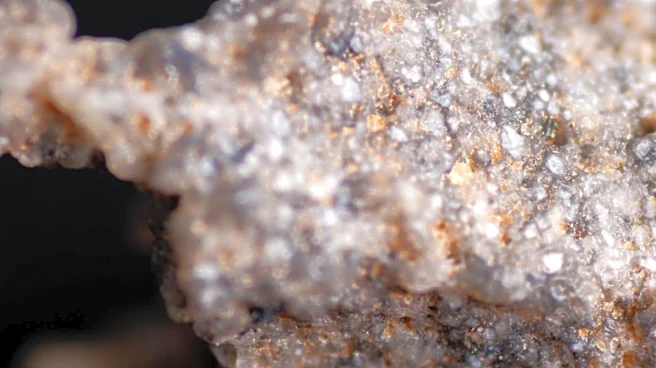
The drilling campaign is focused on three sites within a pegmatite system that extends over 5 kilometers. The Ilua site, situated in the Nunarsuit licence area, is accessible and suitable for drilling operations. Previous surface sampling in 2025 revealed significant REE enrichment, with total rare earth oxide grades reaching up to 2.3%, and approximately 27% of the content comprising heavy rare earth elements. The samples also indicated low levels of radionuclides, below the regulatory limits set by the Greenland Government. The current program includes geological mapping, channel sampling, and further mineralogical studies to assess the size, scale, and potential economic value of the mineralized system.
Why It's Important?
The drilling at Ilua is significant as it represents the first subsurface evaluation of the site's mineralization, which could potentially lead to the development of a new source of rare earth elements. These elements are critical for various high-tech applications, including electronics, renewable energy technologies, and defense systems. The successful extraction and processing of REEs from Ilua could enhance Amaroq's position in the global market and contribute to the diversification of supply sources for these strategic materials. Additionally, the relatively low uranium and thorium content in the pegmatite system suggests a more straightforward processing route, which could reduce environmental and regulatory challenges. This development could also have broader implications for Greenland's mining industry, potentially attracting further investment and exploration activities in the region.
What's Next?
As the drilling progresses, Amaroq plans to provide updates on the findings and assay results. The company aims to clarify the geometry and continuity of the mineralized system, which will inform its commercial prospects. If the results are favorable, Amaroq may proceed with further exploration and development activities, potentially leading to the establishment of a mining operation. This could involve securing additional funding, obtaining necessary permits, and engaging with local communities and stakeholders. The outcome of this drilling campaign will likely influence future exploration strategies and investment decisions in Greenland's mining sector.