


What's Happening?
Former Chicago Bears linebacker Otis Wilson was involved in an altercation with security personnel at Soldier Field following Sunday's game. According to Kalyn Kahler of ESPN, Wilson, a member of the 1985 Bears Super Bowl championship team, and his wife
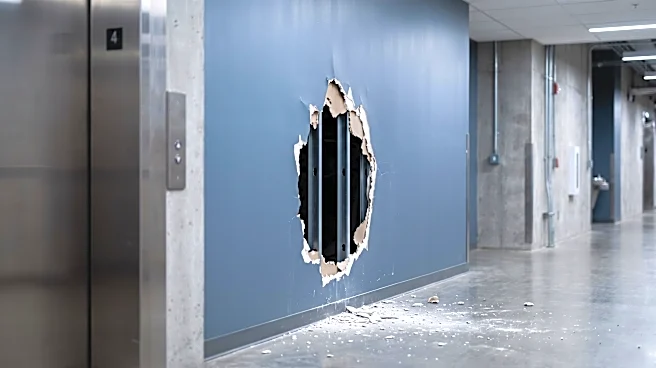
reportedly boarded a media elevator. An argument ensued when security personnel asked them to leave, which they refused. Wilson claims he and his wife were "assaulted by private security personnel." Conversely, the security company alleges that Wilson "forced his way onto the elevator," became "physically combative and violently attacked" a female officer, and "aggressively threw the female officer into a wall . . . leaving a large hole in the wall." Wilson was taken by ambulance to a local hospital for treatment, while the security company states the female officer was also hospitalized with "substantial bruising and injuries to her ribs and arms." Multiple reporters witnessed the moments leading up to the physical confrontation.
Why It's Important?
This incident highlights potential issues with crowd control and security protocols at major sports venues, particularly concerning access for former players and media. The conflicting accounts from Wilson and the security company underscore the challenges in managing high-traffic areas after events and the potential for disputes to escalate. The involvement of a former NFL player, especially one from a celebrated team like the 1985 Bears, draws significant public attention and scrutiny to the incident. It raises questions about the training and conduct of security personnel, as well as the expectations and behavior of individuals, even those with historical ties to the venue or team. The potential for legal consequences for both parties, as suggested by the source, could set precedents for how such altercations are handled in the future and may influence security policies at other stadiums across the U.S.
What's Next?
An investigation is currently underway regarding the altercation. Wilson has requested that Soldier Field and the security company preserve all surveillance and body camera footage of the incident, conduct a full and transparent investigation, and hold those responsible accountable. The outcome of this investigation will likely determine if any legal actions are pursued against Wilson or the security personnel involved. Moving forward, there is an expectation, as noted by David Haugh of 104.3 The Score in Chicago, that Soldier Field and similar venues will need to re-evaluate their procedures for managing media and public access, especially concerning elevators and exit routes after games. The goal will be to find a better way to ensure media can perform their duties without such chaotic incidents occurring, potentially leading to revised security protocols and clearer communication regarding restricted areas.
Beyond the Headlines
The incident at Soldier Field transcends a simple dispute, touching upon broader themes of celebrity status, public access, and the use of force by private security. The conflicting narratives raise ethical questions about accountability and the interpretation of events when multiple parties are involved. It also brings to light the often-unseen pressures faced by security personnel in high-stress environments and the potential for miscommunication or overreaction. Culturally, the reverence for sports legends like Otis Wilson can sometimes create an expectation of preferential treatment, which can clash with strict security protocols. The incident could spark a wider discussion within the sports industry about balancing fan and former player engagement with necessary security measures, potentially leading to new guidelines for interactions between security staff and VIPs at sporting events nationwide. The damage to the wall also symbolizes the physical and reputational impact of such confrontations.