








What's Happening?
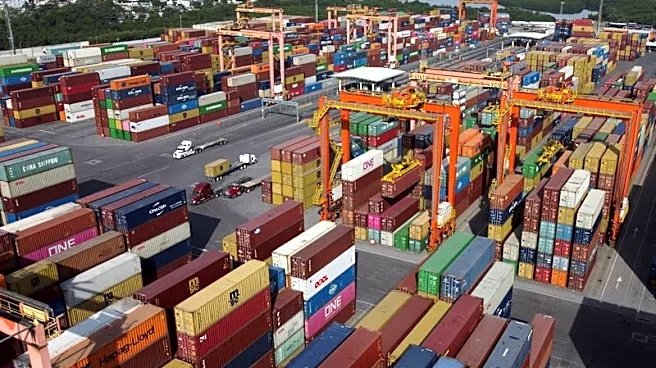
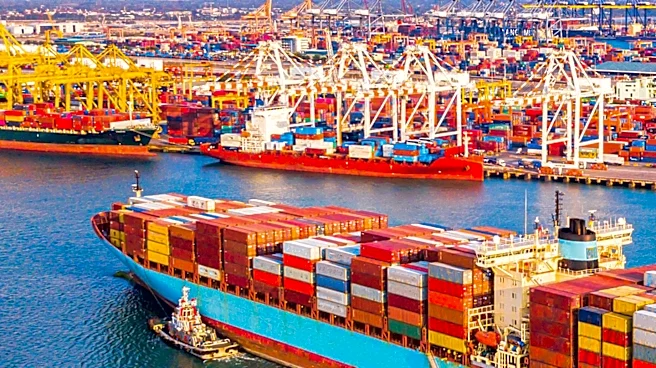
The Jones Act, a 1920 maritime law requiring that all domestic water shipments be conducted on American-built, owned, and crewed ships, has been temporarily waived by President Trump to alleviate supply chain issues and reduce oil prices. This waiver,
initially issued in March and potentially extended, aims to address the high costs associated with domestic shipping under the Act. The Jones Act has historically protected U.S. shipbuilders from international competition, allowing them to charge higher rates. However, this protection has led to a decline in the U.S. shipbuilding industry, which now lags behind countries like China and South Korea. The waiver has allowed for more efficient domestic oil distribution, particularly benefiting regions like the Northeast and California, which typically rely on foreign oil imports.
Why It's Important?
The waiver of the Jones Act underscores the broader economic implications of protectionist policies on domestic industries and consumer prices. While the Act was intended to bolster national defense by maintaining a strong domestic shipbuilding industry, it has inadvertently increased shipping costs and limited competition. This has resulted in higher consumer prices and a reliance on foreign imports. The temporary waiver has demonstrated potential benefits, such as improved supply chains and reduced costs for domestic goods, highlighting the need for potential reform or repeal of the Act. The situation presents a critical opportunity for lawmakers to reconsider the balance between protectionism and economic efficiency.
What's Next?
As the waiver's expiration approaches, Congress faces pressure to either extend it or consider reforms to the Jones Act. Potential reforms could include exemptions for U.S. territories or allowing allied nations' ships to participate in domestic trade. The ongoing debate will likely involve significant lobbying from shipbuilders and political stakeholders, with implications for future U.S. maritime policy and economic strategy. The outcome could set a precedent for how the U.S. navigates protectionist policies in a globalized economy.