




What's Happening?
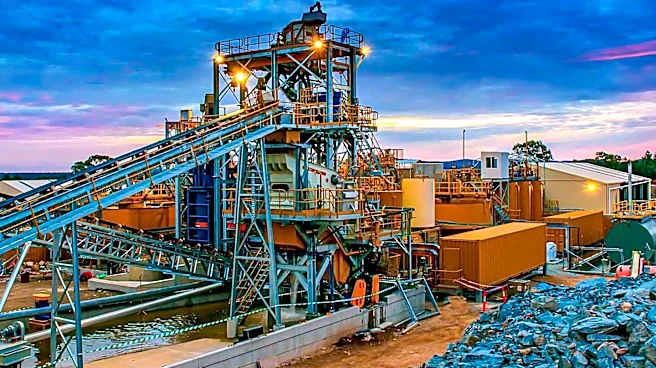
The World Bank Group is supporting Chile's state-owned copper giant, Codelco, with nearly $1.4 billion in financing, utilizing a model that aims to attract long-term private capital while reducing mining's environmental footprint. This approach involves
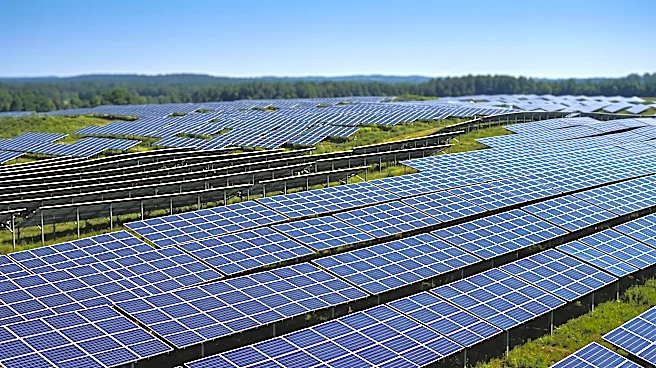
guarantees from the World Bank Group’s Multilateral Investment Guarantee Agency (MIGA) to protect commercial lenders, such as Santander and HSBC, if Codelco fails to meet financial obligations. This allows banks to extend longer-term financing without MIGA directly lending to the mining company. The latest financing includes a $600 million loan backed by an $859.1 million MIGA guarantee, following an earlier $762 million financing. These funds are specifically for Codelco's electricity-purchase obligations under long-term renewable-energy contracts, not for new mines or expansions. Codelco is working towards obtaining 100% renewable electricity by 2030, having secured contracts for 85% of its needs by 2026.
Why It's Important?
This financing model is significant as it demonstrates how development institutions can mobilize commercial capital for sustainable practices within the mining sector. For the U.S. and global markets, this model offers a blueprint for de-risking investments in critical mineral production, which is essential for the energy transition. By supporting Codelco's shift to renewable energy, the World Bank is indirectly promoting a more environmentally responsible supply chain for copper, a vital commodity for electric vehicles and renewable energy infrastructure. This could influence U.S. companies involved in mining, renewable energy, and finance to explore similar guarantee structures for their international projects, particularly in countries rich in critical minerals. It also highlights the growing importance of ESG (Environmental, Social, and Governance) factors in attracting investment in the extractive industries.
What's Next?
The World Bank intends to promote this financing structure as a model for other mineral-rich countries seeking to attract private capital for sustainable development. This could lead to similar MIGA-backed guarantees for state-owned enterprises or private companies in other nations, particularly those with significant mineral resources like Zambia, which is working with the World Bank on an energy transition roadmap for its copper output. Codelco will continue its transition to 100% renewable electricity, potentially setting a precedent for other large mining operations globally. The success of this model could encourage more private lenders to engage in long-term financing for sustainable infrastructure and energy projects in the mining sector, reducing reliance on direct development bank lending.
Beyond the Headlines
The World Bank's initiative with Codelco goes beyond mere financial backing; it represents a strategic shift in how international development institutions view and facilitate investment in the mining sector. By focusing on renewable energy integration and de-risking private capital, it addresses the dual challenges of climate change and sustainable economic development. This model implicitly acknowledges the ethical imperative to ensure that mineral wealth contributes to broader societal benefits and environmental stewardship, rather than solely focusing on extraction. It also highlights the evolving role of state-owned enterprises in leading sustainability efforts within their respective industries. Long-term, this could foster a new paradigm for resource development, where financial innovation and environmental responsibility are intertwined, potentially influencing global standards for mining investment and operations.