





What's Happening?
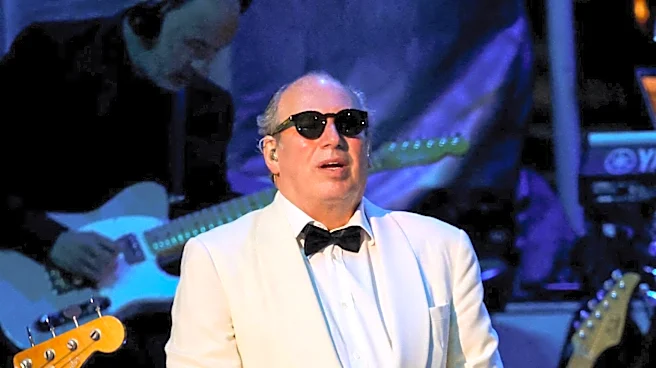
Hans Zimmer, a prominent film composer, has significantly reshaped film music through his collaborative approach, bold orchestration, electronic experimentation, and emotionally charged soundscapes. His career, spanning decades, demonstrates a unique
ability to blend orchestral writing with synthesizers, electronic textures, and unconventional rhythms. Zimmer's early experiences in the experimental electronic music scene of late 20th-century Britain and his collaboration with British composer Stanley Myers were foundational, teaching him how to combine electronic instruments with orchestral writing and how music responds to narrative elements. This collaborative ethos became central to his work, where scores often involve a network of composers, orchestrators, performers, and sound specialists. For instance, in 'Gladiator,' Zimmer collaborated with Australian musician Lisa Gerrard, whose distinctive vocal performances added an otherworldly quality to the score. Similarly, for 'The Lion King,' he worked with Elton John, Tim Rice, and South African musician Lebo M, integrating African vocal traditions and popular songs into the orchestral score. His work on 'The Dark Knight' trilogy involved collaborations with James Newton Howard, bringing a new psychological intensity to superhero cinema.
Why It's Important?
Hans Zimmer's collaborative and innovative approach to film scoring holds significant importance for the U.S. entertainment industry. His methods have redefined audience expectations for film music, particularly in action, science fiction, and fantasy genres, influencing a generation of composers and filmmakers. By demonstrating how electronic music can convey complex emotions and serve as a central component of cinematic storytelling, Zimmer has expanded the creative possibilities for film scores. This has led to a more dynamic and diverse soundscape in Hollywood productions, attracting wider audiences and enhancing the overall cinematic experience. His ability to integrate diverse musical traditions, such as African vocalizations in 'The Lion King' or experimental instruments in 'Dune,' promotes cultural exchange and enriches the global appeal of U.S. films. Economically, his highly successful scores contribute significantly to film revenue through soundtrack sales, streaming, and concert performances, benefiting studios, artists, and music publishers. Zimmer's influence also extends to technological advancements in music production, pushing the boundaries of what is possible in film scoring.
What's Next?
Hans Zimmer continues to be a highly sought-after composer, with recent works including 'Dune: Part Two,' where he expanded the musical language established in the first film. His ongoing projects and future collaborations are likely to further push the boundaries of film scoring, influencing upcoming Hollywood productions. His concert performances, which bring film scores to audiences beyond the cinema, are expected to continue, further solidifying the cultural impact of film music as an art form in its own right. The debates surrounding his influence, particularly regarding the widespread adoption of repeating patterns and monumental climaxes in contemporary film scores, suggest that his work will continue to be a subject of critical discussion and inspiration for emerging composers. As technology evolves, Zimmer's continued experimentation with electronic elements and sound design will likely lead to new innovations in how music is created and integrated into visual media.
Beyond the Headlines
Beyond the immediate impact on film scores, Hans Zimmer's collaborative philosophy and genre-defying work have deeper implications for artistic creation and cultural exchange. His willingness to work with a diverse network of musicians and specialists underscores the idea that great art often emerges from collective effort and the synthesis of varied perspectives. This approach challenges the notion of the solitary genius, highlighting the power of interdisciplinary collaboration. Ethically, his integration of global musical traditions, such as African and Middle Eastern influences, promotes a more inclusive and representative cultural landscape in mainstream media. This can foster greater understanding and appreciation of diverse cultures among global audiences. Furthermore, Zimmer's ability to create immersive soundscapes that evoke profound emotional responses speaks to the universal power of music to connect with the human experience, transcending language and cultural barriers. His legacy is not just about the sounds he created, but about the collaborative spirit and innovative mindset he brought to the art of storytelling through music.