








What's Happening?
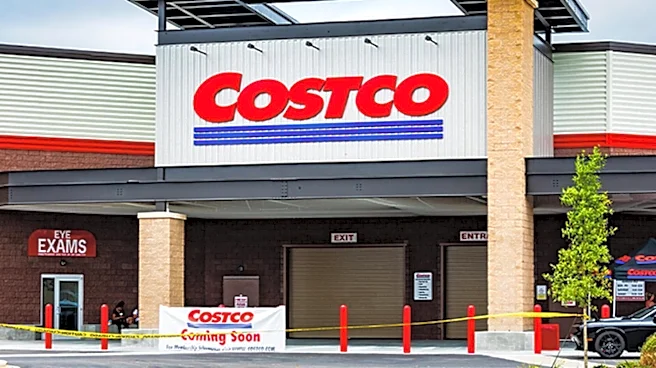
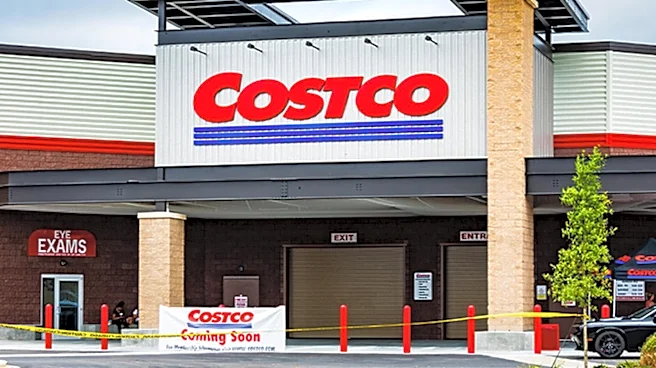
Costco Wholesale Corporation continues to provide substantial savings to its members across various product categories, including groceries, fuel, and prescriptions. A standard annual membership in the U.S. costs $65, with an executive membership available
for $130. The company is known for capping profits on goods at 11%-15% to ensure competitive pricing. This strategy allows members to purchase organic produce, grass-fed meats, and other premium grocery items at lower costs compared to traditional grocery stores. Additionally, Costco offers competitive fuel prices and significantly reduced prescription costs, with some members reporting savings of 1%-5% compared to other pharmacies like Walgreens. The retailer also stocks products from regional businesses, wineries, and chocolatiers, enhancing its product diversity while maintaining affordability.
Why It's Important?
The ability of Costco to offer consistently low prices on essential goods has a significant impact on household budgets across the U.S., particularly as the cost of living rises. For families, the savings on groceries, fuel, and medications can be substantial, making membership a financially sound decision. The competitive pricing on premium and organic items also makes healthier eating more accessible to a broader demographic. Furthermore, Costco's business ethos, which includes treating employees well, contributes to a positive retail environment and aligns with consumer values. The company's approach to limiting product choices, while a marketing strategy, also simplifies the shopping experience for consumers, potentially reducing decision fatigue and encouraging efficient purchasing.
What's Next?
As economic pressures continue, Costco's value proposition is likely to remain a key draw for U.S. consumers. The company's consistent focus on low prices and member benefits suggests that it will continue to attract and retain a large membership base. Future developments may include further expansion of its services, such as vacation packages and electronics, which already offer significant savings. Members can also anticipate continued efforts by Costco to optimize its in-store experience, potentially through strategies like offering executive members early access to stores to mitigate crowds. The ongoing competitive landscape in retail will likely push Costco to maintain its aggressive pricing strategies and diverse offerings to sustain its market position.
Beyond the Headlines
Beyond the immediate financial benefits, Costco's operational model highlights broader implications for the retail industry and consumer behavior. The company's success in capping profits and offering fewer choices challenges the conventional retail wisdom that emphasizes vast product assortments. This model suggests that consumers prioritize value and efficiency over endless options, especially for staple goods. The 'neuromarketing' tactics employed by Costco, such as strategically placing household staples to encourage exploration of other retail items, underscore the psychological aspects of consumer spending. Understanding these tactics can empower consumers to shop more mindfully, maximizing savings while avoiding unnecessary purchases. The company's commitment to employee welfare also sets a benchmark for ethical business practices in the retail sector.