






What's Happening?
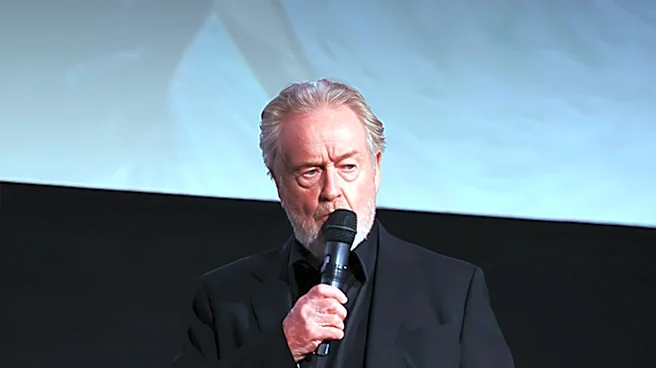
Ridley Scott's representative has refuted rumors suggesting the director blamed actor Paul Mescal for the underwhelming reception of 'Gladiator II' and questioned his masculinity. The allegations originated from a report by Puck News writer Matthew Belloni,
who claimed sources close to the film indicated Scott held Mescal responsible for the movie's underperformance, believing he was not 'masculine enough' for the role. However, Scott's spokesperson stated to Entertainment Weekly that these claims are 'not true.' The representative also clarified that Mescal's departure from another film, 'The Dog Stars,' was due to scheduling conflicts with other projects, specifically his involvement in a Beatles-related film, and not because of any dissatisfaction from Scott regarding his masculinity or performance. Scott's representative emphasized the director's positive working relationship with Mescal, stating, 'Ridley loves Paul and was excited to work with him on Dog Stars after having [enjoyed] such a great collaboration on Gladiator II.'
Why It's Important?
This denial is important for several reasons within the entertainment industry. Firstly, it protects the professional reputations of both Ridley Scott and Paul Mescal. Unsubstantiated rumors, especially those questioning an actor's suitability for a role based on subjective traits like 'masculinity,' can negatively impact their careers and future casting opportunities. Secondly, it highlights the often-speculative nature of industry reporting and the need for official clarification to counter misinformation. The initial report, if left unchallenged, could have fueled public discourse around gender stereotypes in casting and the pressures actors face. Thirdly, the clarification regarding Mescal's scheduling conflicts provides a more common and understandable reason for an actor's withdrawal from a project, contrasting with the more sensational and potentially damaging 'masculinity' narrative. This incident underscores the delicate balance between media scrutiny and the need for accurate reporting in Hollywood, where perceptions can significantly influence careers and project outcomes.
What's Next?
Following the representative's denial, it is expected that the immediate speculation surrounding Ridley Scott's alleged comments about Paul Mescal will subside. The focus will likely shift back to the upcoming projects for both individuals. Paul Mescal is reportedly 'stacked up' with other films, including a Beatles project, which was cited as the reason for his departure from 'The Dog Stars.' Ridley Scott will continue with his directorial endeavors, and the industry will likely move past this particular rumor. The incident may serve as a cautionary tale for media outlets regarding the verification of sources and the potential impact of unconfirmed reports on individuals' careers. Future collaborations between Scott and Mescal, if any, would further demonstrate the lack of animosity suggested by the initial rumor. The box office performance of 'The Dog Stars,' which reportedly made less than half its production budget, will likely be analyzed independently of this specific controversy.
Beyond the Headlines
Beyond the immediate denial, this incident touches upon broader themes within the film industry, particularly the scrutiny actors face regarding their perceived image and suitability for roles. The concept of 'masculinity' in casting, especially for roles in action or historical dramas like 'Gladiator II,' can be a complex and often subjective criterion. This rumor, even if false, highlights the persistent pressure on male actors to conform to certain archetypes. It also underscores the power dynamics between directors and actors, and how easily a director's alleged private comments can become public narratives, potentially shaping an actor's career trajectory. Furthermore, the quick and decisive denial from Scott's representative demonstrates the industry's increasing awareness and proactive approach to managing public relations and protecting talent from damaging speculation. This event serves as a reminder of the ongoing discussions about gender representation, typecasting, and the impact of media narratives on artistic careers in Hollywood.