





What's Happening?
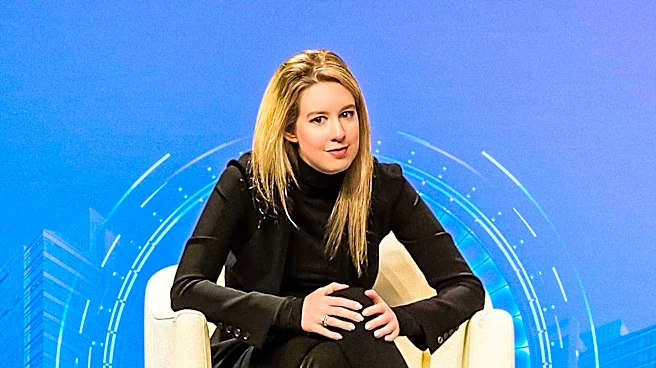
Elizabeth Holmes, the founder and former CEO of Theranos Inc., is experiencing a shift in public perception following the release of Nathan Fielder’s documentary, 'You Can See Everything,' which chronicled 34 days with her before her prison sentence.
Holmes, who founded Theranos in 2003 after dropping out of Stanford University, initially gained significant attention for her company's claim of developing a machine capable of running over a thousand medical tests from a single finger prick. Theranos, once valued at $9 billion, attracted substantial investments and commercialized its services in pharmacies like Walgreens. However, the company's fraudulent activities were eventually exposed, revealing that its machines were faulty and produced unreliable results, leading to a ban on funding and a trial for wire fraud. The documentary has reportedly humanized Holmes, portraying her as a stressed mother losing time with her children, which has contributed to a more sympathetic view among some members of the public.
Why It's Important?
The evolving public perception of Elizabeth Holmes highlights the complex interplay between legal accountability, media representation, and societal attitudes towards high-profile figures, particularly those involved in corporate fraud. Her initial rise as the world's youngest self-made female billionaire by Forbes Magazine was seen by some as a significant step for gender equality, with her 'husky, authoritative voice' and composed demeanor contributing to her image in a male-dominated industry. The current shift towards sympathy, influenced by her portrayal as a mother facing a prison sentence, raises questions about how gender and personal circumstances can impact public opinion, even in cases of proven fraud. This situation also underscores a broader societal fascination with 'fake it till you make it' narratives, particularly within the context of Silicon Valley, where some argue that Holmes' actions were not entirely unique to the entrepreneurial culture.
What's Next?
The long-term impact of the documentary on public opinion and Holmes' legacy remains to be seen. While some may continue to view her actions as a clear case of fraud that endangered public health, others might increasingly adopt a more sympathetic stance, influenced by the narrative presented in the documentary. This could potentially fuel further discussions about the ethical responsibilities of entrepreneurs, the pressures within the tech industry, and the role of media in shaping public perception of convicted individuals. The case may also continue to serve as a cautionary tale for investors and consumers regarding due diligence and the critical evaluation of groundbreaking technological claims, especially in sensitive sectors like healthcare. The ongoing public discourse will likely continue to weigh the facts of her conviction against the more personal narrative now being presented.
Beyond the Headlines
The case of Elizabeth Holmes and the subsequent shift in public sentiment delve into deeper societal implications concerning the 'fake it till you make it' ethos prevalent in certain business cultures, particularly Silicon Valley. It prompts a critical examination of why some individuals involved in similar fraudulent activities might face less public scrutiny or even garner sympathy, while others are unequivocally condemned. The narrative surrounding Holmes also touches upon the challenges and biases faced by women in leadership roles, where their personal lives and public personas can be scrutinized differently than their male counterparts. This situation raises ethical questions about the balance between holding individuals accountable for their actions and the potential for media to influence public empathy, even for those convicted of serious offenses. It highlights the ongoing debate about justice, rehabilitation, and the complex nature of public forgiveness in the digital age.