




What's Happening?
Berkshire Hathaway's equity portfolio has increasingly focused on artificial intelligence (AI) under the leadership of CEO Greg Abel, who took over at the beginning of 2026. Three of the conglomerate's largest holdings—Apple, Coca-Cola, and Alphabet—now
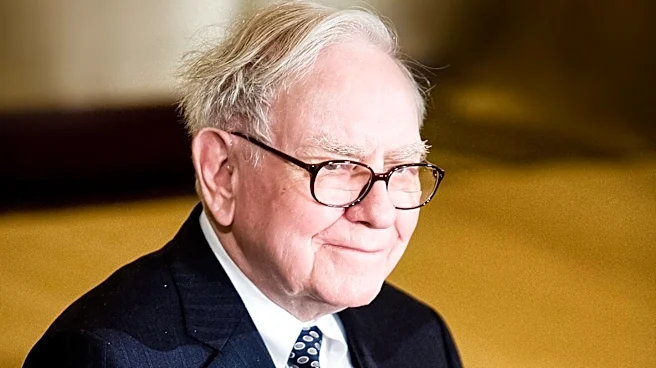
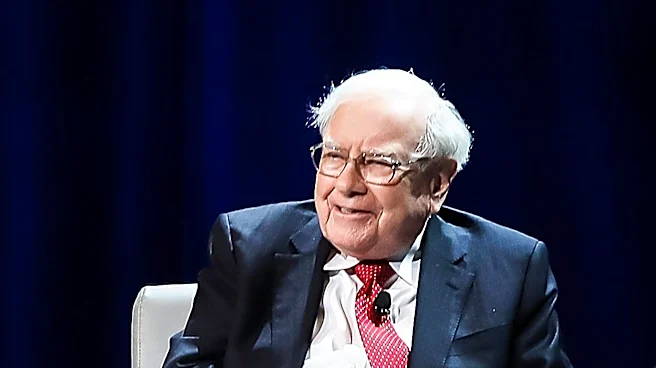
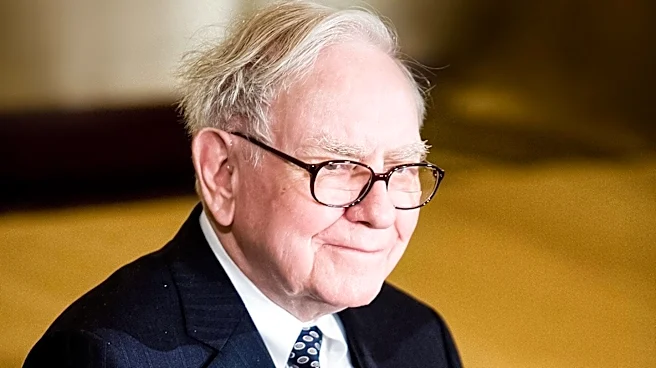
constitute 41.6% of its approximately $358 billion stock portfolio. This marks a notable shift from the investment philosophy of former CEO Warren Buffett, who led the company until the end of 2025 and was known for avoiding volatile technology trends. While these positions were initially assembled under Buffett, Abel has significantly expanded investments in these AI-driven companies. His most aggressive move has been in Alphabet, where Berkshire's stake has grown roughly sixfold. Berkshire's largest single position remains Apple, accounting for 22.4% of the portfolio, followed by Coca-Cola at 11%, and Alphabet at 8.2%.
Why It's Important?
This strategic pivot by Berkshire Hathaway under Greg Abel signifies a major shift in investment philosophy for one of the most influential holding companies in the U.S. The increased concentration in AI-driven companies like Apple, Coca-Cola, and Alphabet indicates a belief in the long-term growth potential of artificial intelligence across various sectors. For the U.S. economy, this move by a major investor like Berkshire Hathaway could signal a broader trend of capital allocation towards companies leveraging AI for competitive advantage. It also highlights the growing integration of AI into established businesses, moving beyond pure tech companies. The success or failure of these concentrated bets will have significant implications for Berkshire Hathaway's financial performance and could influence other large institutional investors' strategies, potentially accelerating the adoption and investment in AI technologies across the market.
What's Next?
The future performance of Berkshire Hathaway's portfolio will largely depend on the continued success of its AI-focused holdings. Apple's consumer AI rollout, for instance, will be a critical factor, as a stumble could significantly impact Berkshire's results given Apple's substantial weighting in the portfolio. Similarly, Alphabet's ability to leverage AI in its search and cloud services to drive revenue growth will be closely watched. Greg Abel's decision to pause further investments in Alphabet in the third quarter of 2026, despite a dip in stock price, suggests a careful consideration of portfolio concentration risk. This indicates that future investment decisions will likely balance growth opportunities in AI with prudent risk management, potentially leading to more diversified AI-related investments or further consolidation in existing positions based on market performance and strategic fit.
Beyond the Headlines
The shift in Berkshire Hathaway's investment strategy under Greg Abel reflects a broader evolution in how traditional value investors are approaching the technology sector, particularly artificial intelligence. Warren Buffett's long-standing skepticism towards tech stocks has given way to a more pragmatic approach that recognizes AI as a fundamental driver of future economic growth, even within established companies. This move could challenge the conventional wisdom that 'value investing' and 'tech investing' are mutually exclusive. It also underscores the pervasive nature of AI, demonstrating its impact not just on tech giants but also on consumer staples like Coca-Cola, which is investing heavily in cloud and AI tools. This integration of AI into diverse industries suggests a long-term structural change in the U.S. economy, where AI proficiency will increasingly become a prerequisite for sustained corporate success and investor confidence.