







What's Happening?
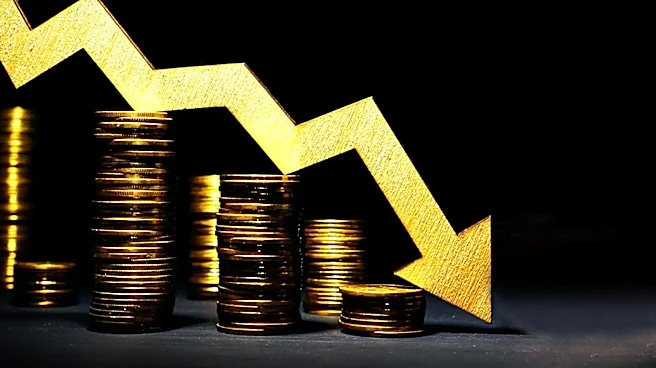
Commerzbank has revised its forecast for gold and silver prices, citing the ongoing conflict in the Middle East as a significant factor. The bank now expects gold prices to end the year at approximately $4,500 per ounce, down from a previous estimate
of $4,800. Similarly, the year-end silver price target has been lowered to $67 per ounce from $80. Despite these downgrades, Commerzbank maintains a long-term bullish outlook for gold, driven by factors such as skepticism toward the U.S. dollar and central banks diversifying reserves into gold. The conflict in Iran is overshadowing these bullish factors, affecting market sentiment and price stability.
Why It's Important?
The downgrades reflect the complex interplay between geopolitical tensions and market dynamics. The ongoing conflict in the Middle East is creating uncertainty, impacting investor confidence in precious metals as safe-haven assets. This situation underscores the vulnerability of commodity markets to geopolitical events. The Federal Reserve's monetary policy also plays a crucial role, as persistent inflation pressures could influence interest rate decisions, further affecting gold prices. The bank's analysis suggests that while short-term pressures exist, the structural drivers for gold's long-term value remain intact, highlighting the metal's role as a hedge against economic instability.
What's Next?
Looking ahead, the market will closely monitor developments in the Middle East and the Federal Reserve's policy decisions. Any resolution or escalation in the conflict could significantly impact gold and silver prices. Additionally, the Federal Reserve's stance on interest rates will be pivotal, as aggressive rate hikes could dampen gold's appeal. Investors will also watch for signs of inflation moderation, which could support a recovery in gold prices. Commerzbank suggests that if inflation pressures ease, gold could reach $5,000 per ounce by 2027, indicating potential for long-term gains despite current challenges.