


What's Happening?
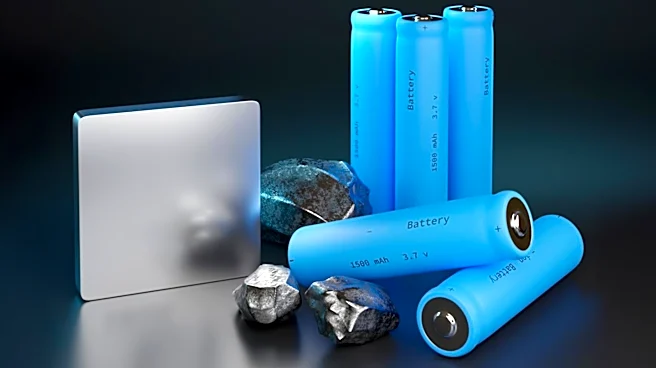
India has implemented a ban on the export of lithium-ion battery black mass, a powder-like material recovered from shredded discarded batteries and manufacturing waste. This strategic move aims to retain critical minerals such as lithium, cobalt, nickel,
and manganese within the country. These minerals are vital for electric vehicle batteries, electronics, renewable energy storage, and advanced manufacturing. The government's decision is intended to ensure that battery waste generated domestically is recycled and refined within India, rather than being sent overseas, primarily to China, which holds a near-monopoly in black mass processing. Domestic battery recyclers and critical mineral recovery units in India have reportedly been operating below full capacity due to insufficient raw material availability, despite the expansion of the country's recycling infrastructure. The ban seeks to address this by making domestically generated black mass available for local processing, thereby reducing India's reliance on imported raw materials and strengthening its domestic recycling capabilities.
Why It's Important?
This export ban is a significant step for India in securing its supply chain for critical minerals, which are essential for its burgeoning electric vehicle and renewable energy sectors. By mandating domestic recycling, India aims to reduce its dependence on foreign sources, particularly China, which currently dominates the global processing of black mass. This policy supports the growth of India's domestic battery recycling industry, enabling companies to utilize their processing capacities more fully and fostering the development of hydrometallurgical processes necessary for extracting valuable elements. The move aligns with global trends, as Europe and the United States have also implemented similar restrictions to conserve critical minerals. For India, this could lead to greater self-sufficiency in battery production, stimulate investment in advanced recycling technologies, and create a more robust circular economy for essential materials, ultimately bolstering its economic and strategic independence in key technological sectors.
What's Next?
Following the export ban, India's domestic battery recycling industry is expected to see increased utilization of its processing capacity, which is estimated to be around 10,000 tonnes per year, with some companies like Rubamin having 5,000-6,000 tonnes of capacity. The government anticipates that the practical processing capacity will soon match the generation of black mass. The recycled materials, such as lithium carbonate, lithium sulfate, nickel sulfate, and cobalt sulfate, will be produced to battery-grade standards. While these chemicals are currently being exported due to the nascent stage of gigafactories in India, the long-term vision is for these materials to feed into domestic battery cell manufacturing as more gigafactories become operational. This will gradually reduce India's reliance on imported cells and foster a complete domestic ecosystem for battery production, from raw material recycling to final product manufacturing, within the next three to five years.
Beyond the Headlines
The ban on black mass exports signifies a broader strategic shift in India's approach to resource management and industrial policy. It underscores a commitment to developing a circular economy, where valuable resources are recovered and reused, rather than being discarded or exported. This policy has ethical and environmental implications, promoting sustainable practices by reducing the need for fresh mining and mitigating the environmental impact of battery waste. Legally, it establishes a precedent for stricter controls over critical raw materials, potentially influencing other nations to adopt similar protectionist measures. Culturally, it reflects a growing national consciousness around self-reliance and technological sovereignty, particularly in sectors critical for future economic growth and national security. In the long term, this could position India as a significant player in the global battery supply chain, challenging existing monopolies and fostering international collaborations based on shared resource security goals.