


What's Happening?
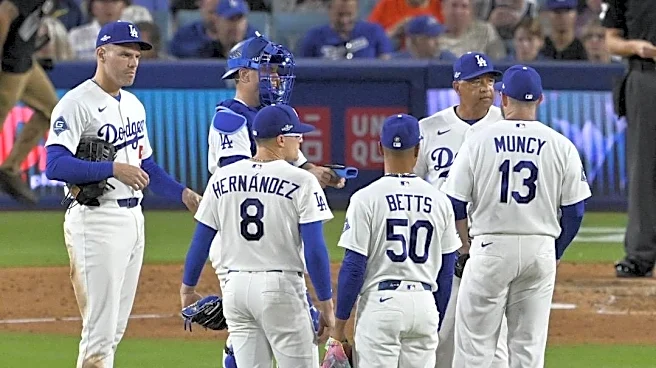
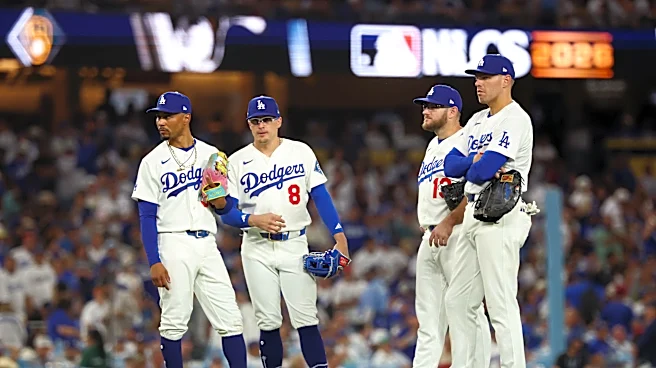
The Los Angeles Dodgers experienced significant offensive inconsistencies during the 2026 season, which ultimately led to their elimination in October. Over eight postseason games, the team posted a .195/.267/.323 slash line, with only nine home runs,
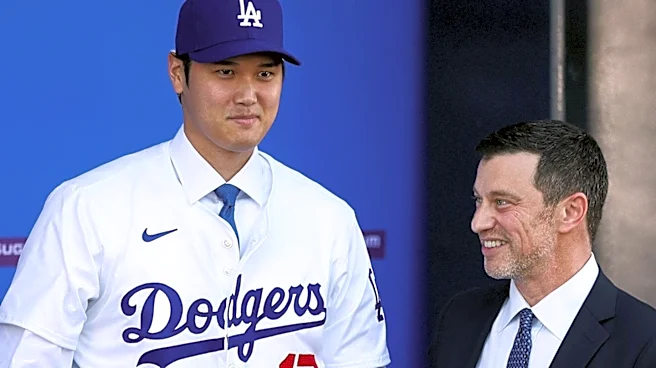
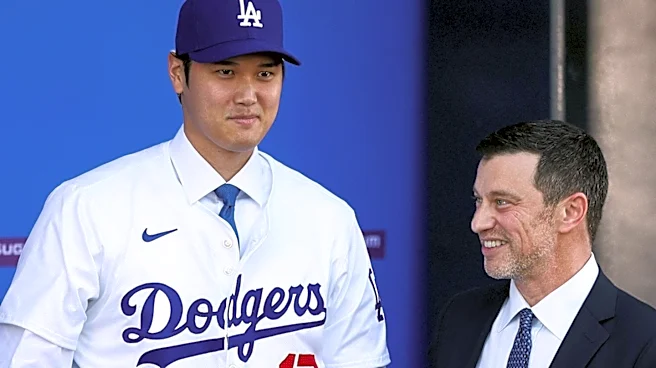
22 RBIs, and 25 runs scored. The lineup struggled with runners in scoring position, lacked power, and drew fewer walks than usual. These issues, which first appeared in July and August, resurfaced during the postseason despite a brief improvement in September against weaker opponents. President of Baseball Operations Andrew Friedman acknowledged the difficulty of hitting against constantly adjusting pitchers and the rules that often favor run prevention. He stated that the organization will dedicate considerable offseason attention to identifying and correcting these flaws, emphasizing the urgency given the 2026 season's inconsistency.
Why It's Important?
The offensive struggles of the Los Angeles Dodgers are a critical concern for the franchise, especially given their high expectations and significant investments in player talent. The team's inability to consistently produce runs, particularly in high-stakes postseason games, highlights a fundamental flaw that needs immediate attention. Friedman's commitment to a thorough offseason evaluation underscores the seriousness of the issue. If the Dodgers fail to address these offensive shortcomings, it could jeopardize their future championship aspirations and impact fan confidence. The discussion around age as a contributing factor also has broader implications for team roster construction and player development strategies across MLB, as teams grapple with how to maintain offensive production with an aging core while integrating younger talent.
What's Next?
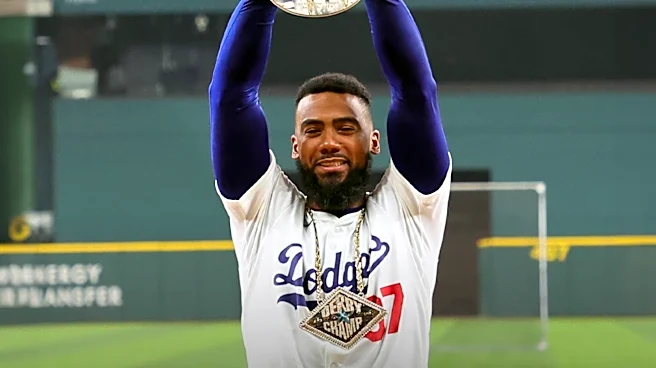
The Dodgers will conduct an extensive offseason evaluation to pinpoint the root causes of their offensive inconsistencies. Friedman indicated that the team will focus on developing better methods to counter pitching advantages and create runs. While age has been suggested by some as a primary factor, Friedman rejects it as the sole explanation, noting that some older players finished the season strongly. The team has limited opportunities for external upgrades, with second base being the clearest opening and prospect Josue De Paula potentially replacing Teoscar Hernández in left field. The Dodgers are relying on internal rebounds from key players like Will Smith, Freddie Freeman, Mookie Betts, Max Muncy, and Shohei Ohtani, along with a healthy Ohtani, to improve their offensive output in 2027. Without these improvements, the team risks facing similar problems next season.
Beyond the Headlines
The Dodgers' offensive woes and the subsequent internal review by Andrew Friedman reveal the complex challenges faced by modern baseball franchises in maintaining peak performance. The debate over whether age is a significant factor touches upon the broader issue of player longevity and the physical demands of the sport. It also highlights the constant strategic adjustments required in MLB, where rule changes and pitching advancements continually shift the balance between offense and defense. The Dodgers' situation serves as a case study for how even highly successful teams must continuously innovate and adapt to stay competitive, emphasizing the importance of data-driven analysis and strategic roster management in an ever-evolving sports landscape. The team's response to these challenges could set a precedent for how other organizations approach similar issues.