





What's Happening?
Duane Grant, co-founder of Wu-Wear, has provided an in-depth account of the brand's origins and evolution, from its grassroots beginnings in Staten Island to becoming a nationally recognized hip-hop apparel line. Grant, cousin to the late Oliver 'Power'
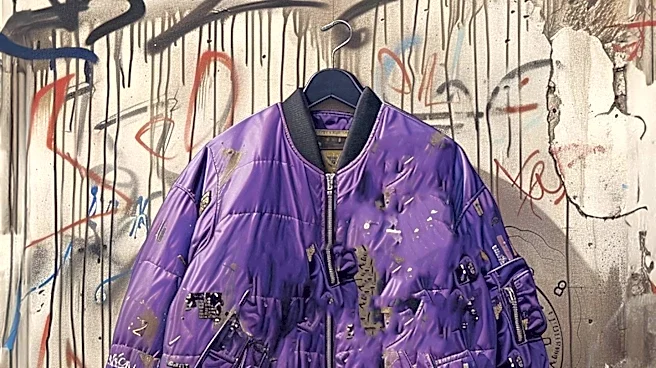
Grant, detailed how Wu-Wear started in 1992 with simple branded hoodies given away in their neighborhood. The brand quickly expanded from a mail-order business and a single store on Victory Boulevard to securing a prominent window display at Macy's 34th Street flagship store around 1998 or 1999. This marked a significant milestone, positioning Wu-Wear as the first hip-hop brand directly tied to a music group to achieve such mainstream retail presence. Grant highlighted Power's vision and leadership in design and business decisions, emphasizing his role in diversifying the product line from t-shirts and windbreakers to denim and velour suits. The brand's success led to overseas manufacturing and joint ventures with companies like Aspen Apparel, which further opened doors to other retail opportunities nationwide.
Why It's Important?
Wu-Wear's pioneering success in mainstream retail is a significant chapter in the history of hip-hop culture and its impact on the fashion industry. Before Wu-Wear, hip-hop-inspired clothing brands like Enyce and Karl Kani existed, but Wu-Wear was unique in its direct affiliation with a specific hip-hop group, the Wu-Tang Clan. This established a blueprint for artist-led merchandise and brand extensions, demonstrating the commercial viability of leveraging musical influence into tangible consumer products. The brand's ability to secure prime retail space in a major department store like Macy's not only validated hip-hop fashion but also paved the way for subsequent artist-driven ventures. This success showcased the economic power of hip-hop's fan base and its potential to drive significant revenue beyond music sales, influencing how artists and labels approached brand development and diversification in the entertainment and retail sectors.
What's Next?
While the article primarily focuses on the historical trajectory of Wu-Wear, it also touches upon the challenges that led to its eventual scaling down. The emergence of numerous other hip-hop-based brands like FUBU, Rocawear, Ecko, and Sean John created an oversaturated market, shrinking Wu-Wear's market share. This increased competition, coupled with the Wu-Tang Clan's declining mainstream popularity, made the business less sustainable. The article implies that the brand had to 'go back to the drawing board' to reassess its strategy. Although the Staten Island store, the last of its kind, closed around 2005-2006, the legacy of Wu-Wear continues to influence hip-hop fashion and artist branding. Future developments for the Wu-Tang brand, as suggested by past ventures into video games and skateboarding, could involve strategic collaborations or re-launches that adapt to contemporary market trends and fan engagement, potentially leveraging nostalgia or new creative directions.
Beyond the Headlines
The narrative of Wu-Wear extends beyond mere commercial success, offering insights into the complexities of managing a brand tied to a large musical group. Duane Grant's account reveals the internal dynamics and 'constant tug of war' that hampered many deals due to the challenges of aligning nine members and their respective managers. This highlights the inherent difficulties in translating artistic collective power into a cohesive business entity, where individual personalities and differing priorities can impede growth. The story also touches on the ethical considerations of branding, as seen in the decision not to 'slap the symbol on everything' to avoid 'bastardizing the brand.' This commitment to brand integrity, even in the face of potential profit, underscores a deeper understanding of cultural authenticity within commercial ventures. Wu-Wear's journey serves as a case study in the evolution of hip-hop from a subculture to a dominant force in fashion and entertainment, grappling with issues of market saturation, brand management, and the delicate balance between artistic vision and commercial viability.