




What's Happening?
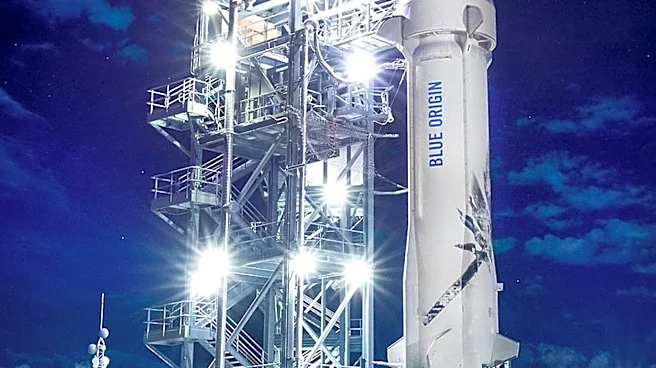
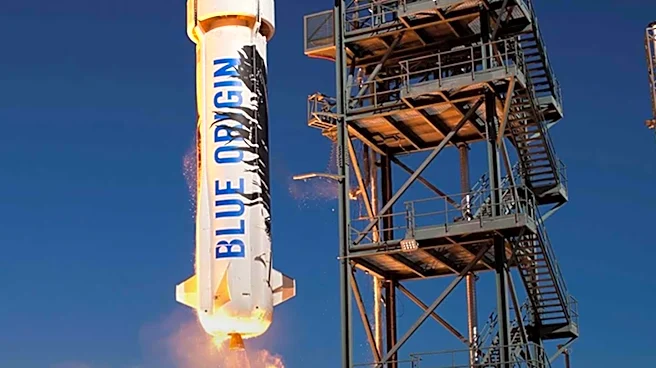
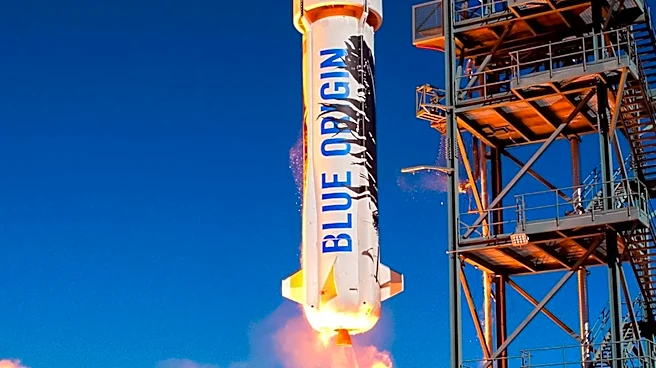
Blue Origin has paused its New Shepard suborbital tourist flight program for at least two years, with the earliest restart projected for early 2028. The last crewed flight, NS-38, occurred in January 2026. This decision, announced via an internal email
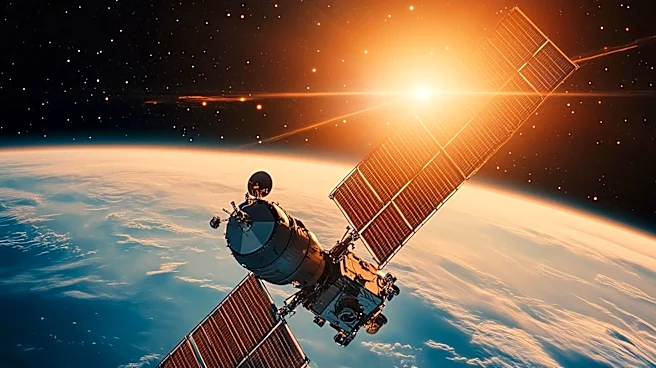
from CEO Dave Limp, redirects company resources and personnel towards its human lunar capabilities and the New Glenn heavy-lift rocket. The pause coincides with the FAA's regulatory freeze on passenger safety rules for commercial spacecraft, which is set to expire on January 1, 2028. Blue Origin has not yet announced a restart date for New Shepard flights, leaving customers with existing bookings in an indefinite waiting period. Meanwhile, Blue Origin has secured a launch services agreement with Google for Project Suncatcher, a research effort involving AI chips on solar-powered satellites, with a launch targeted for the first quarter of 2029 aboard New Glenn.
Why It's Important?
This strategic shift by Blue Origin signifies a reprioritization of its space endeavors, moving away from suborbital space tourism to focus on more ambitious projects like lunar missions and heavy-lift orbital launches. The pause in New Shepard flights impacts the nascent space tourism market, potentially giving competitors like Virgin Galactic an opportunity, although Virgin Galactic has also faced delays. The FAA's regulatory timeline plays a significant role, as the expiration of the 'learning period' in early 2028 could introduce new safety regulations for commercial spaceflight passengers. Blue Origin's commitment to New Glenn and lunar programs, including the Google Suncatcher mission, underscores the growing importance of orbital infrastructure, satellite constellations, and in-space computing for various applications, from AI research to global connectivity.
What's Next?
Blue Origin will continue to focus on the development and deployment of its New Glenn rocket and human lunar capabilities. The Google Suncatcher mission is scheduled for launch in the first quarter of 2029 aboard New Glenn. The earliest possible restart for New Shepard tourist flights is early 2028, coinciding with the potential end of the FAA's regulatory freeze on passenger safety rules. However, Blue Origin has not yet provided a specific restart date or outlined how it will manage its customer backlog. The FAA may propose new safety rules for commercial spaceflight passengers after January 1, 2028, which could influence the future operational parameters for New Shepard and similar vehicles. Congress also has the option to extend the regulatory freeze again.
Beyond the Headlines
Blue Origin's decision reflects the evolving landscape of the commercial space industry, where the long-term strategic value of orbital and lunar infrastructure may be outweighing the immediate returns from suborbital tourism. This pivot could accelerate the development of critical technologies for deep space exploration and in-orbit services, such as data centers and advanced satellite networks. The regulatory environment, particularly the FAA's role in passenger safety, will be a crucial factor shaping the future of commercial human spaceflight. The shift also highlights the intense competition and high stakes in the space sector, where companies must constantly adapt their strategies to technological advancements, market demands, and regulatory frameworks. The focus on AI-powered satellites for Google's Project Suncatcher also points to the increasing integration of artificial intelligence into space applications.