




What's Happening?
U.S. crude oil and road fuel inventories experienced larger-than-expected builds last week, contributing to a bearish sentiment in the oil market. According to Energy Information Administration (EIA) data, commercial crude oil inventories expanded by
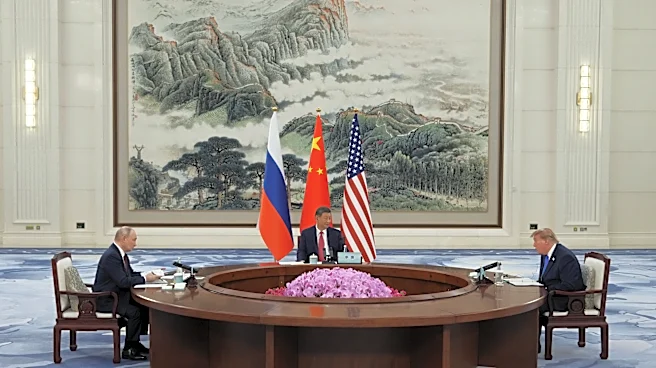
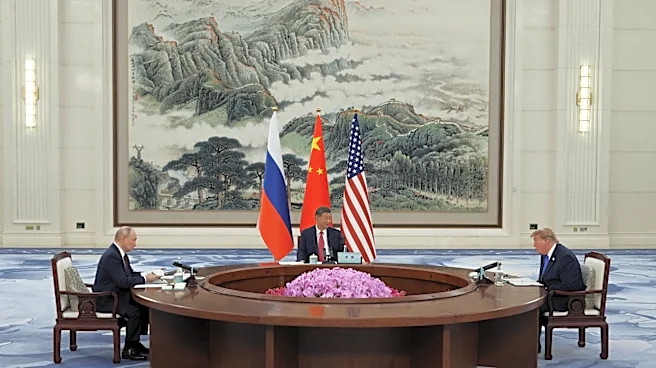
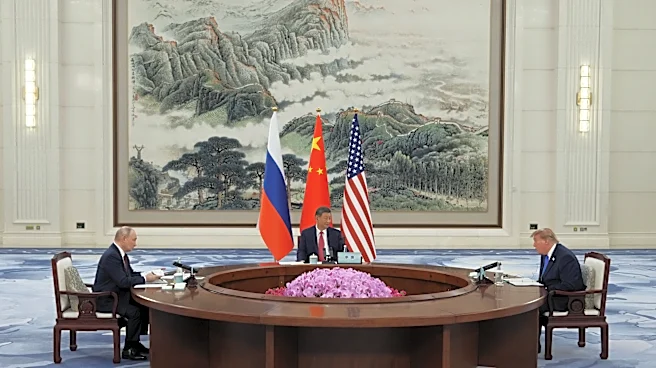
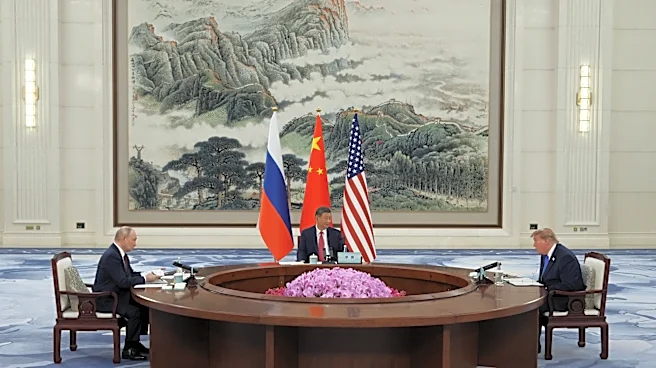
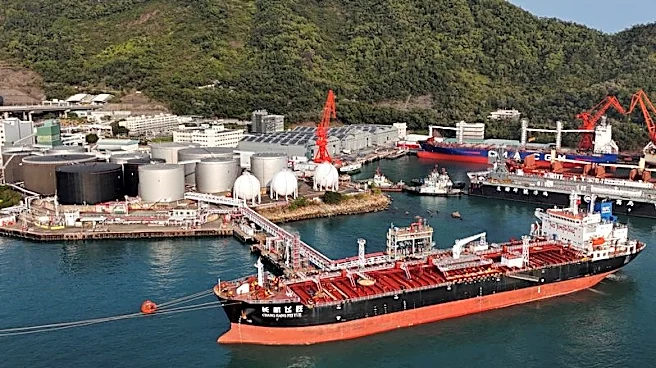
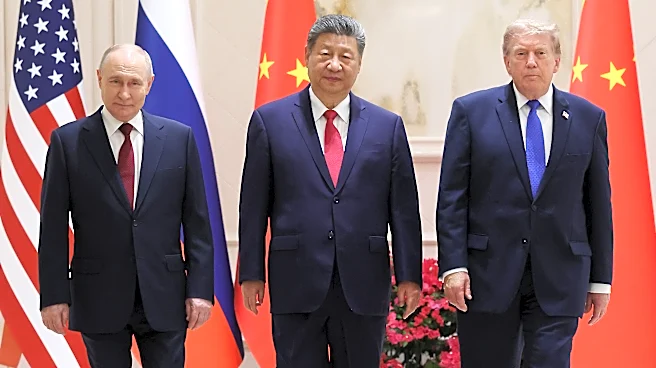
3.4 million barrels, significantly exceeding the anticipated modest increase of 100,000-200,000 barrels. Nationwide gasoline stockpiles also jumped by over 5.2 million barrels, now standing 4.1% higher than the same period last year. Despite these inventory builds, crude benchmarks on Thursday morning pared some of Wednesday's losses, as traders assessed ongoing supply risks and geopolitical developments. These developments include the outcomes of a trilateral meeting between the presidents of the U.S., China, and Russia, which resulted in a joint 'peace declaration' pledging to increase the production and supply of refined products. Additionally, reports from The New York Times indicated that President Trump was considering new strikes on Iran, urged by Israel's prime minister, following the arrival of a third U.S. aircraft carrier strike group in the region.
Why It's Important?
The significant increase in U.S. crude and fuel inventories, coupled with fluctuating oil prices, has direct implications for the U.S. economy and its energy policy. While rising inventories typically signal ample supply and can lead to lower prices at the pump for consumers, the market's volatility underscores the persistent influence of geopolitical factors. For U.S. industries, particularly those reliant on transportation and manufacturing, stable or lower fuel costs can reduce operational expenses. However, the underlying geopolitical tensions, such as potential U.S. military actions in the Middle East, introduce considerable uncertainty and risk premiums into oil prices. This situation highlights the delicate balance the U.S. government faces in managing domestic energy supply, economic stability, and foreign policy objectives. The pledge from the U.S., China, and Russia to increase refined product supply could, if realized, contribute to global energy security and potentially mitigate price spikes, benefiting U.S. consumers and businesses.
What's Next?
Traders will continue to closely monitor U.S. inventory reports, export data, refinery utilization, and gasoline demand to assess the durability of the supply improvement. The impact of the 'peace declaration' from the U.S., China, and Russia on actual refined product supply will be a key factor. Geopolitical developments, particularly concerning the Middle East and any potential U.S. actions against Iran, will remain critical drivers of oil price movements. The presence of multiple U.S. aircraft carrier strike groups in the region suggests a heightened state of alert and potential for rapid escalation, which could quickly reverse any downward trend in oil prices. The market will also be watching for any further statements or actions from President Trump regarding Iran, as well as the broader implications of the trilateral summit on global energy stability. The interplay between these domestic supply indicators and international geopolitical events will dictate the near-term trajectory of oil prices.
Beyond the Headlines
The current situation reveals a complex interplay between domestic energy production, global geopolitical strategy, and international diplomacy. The U.S.'s increasing crude inventories demonstrate its growing capacity as an oil producer, which can act as a buffer against global supply shocks. However, the persistent influence of Middle Eastern tensions on oil prices underscores the interconnectedness of global energy markets and the limits of domestic production in fully insulating the U.S. from international events. The reported consideration of military action against Iran by President Trump, even amidst efforts to stabilize energy markets, highlights the inherent contradictions and challenges in U.S. foreign policy. This dynamic creates a volatile environment for businesses and consumers, where energy costs can shift rapidly based on events far from U.S. borders. The long-term implications involve a continuous re-evaluation of energy independence strategies versus the need for international cooperation to ensure global energy security.