






What's Happening?
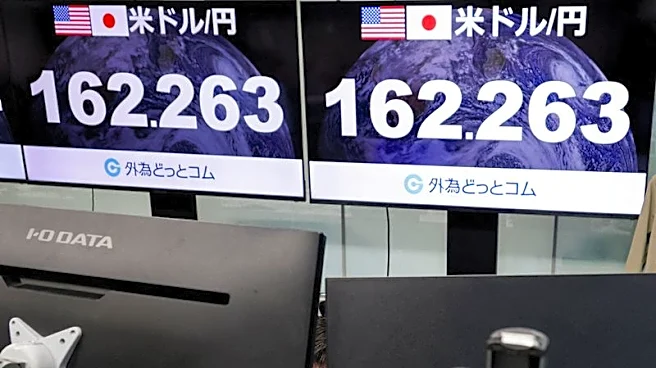
Recent stealth interventions by Japan and South Korea have led to significant volatility in the USD/JPY currency pair. The Japanese yen appreciated sharply following these interventions, which were compounded by month-end financial flows. Despite these fluctuations,
the broader economic fundamentals remain unchanged. The Bank of Japan (BoJ) has maintained its interest rates, with no immediate plans for a rate hike, although there is a possibility of future adjustments if financial conditions warrant. The focus remains on the ongoing Middle East tensions and their potential impact on inflation and economic stability.
Why It's Important?
The interventions highlight the interconnectedness of global financial markets and the impact of geopolitical tensions on currency valuations. The volatility in USD/JPY reflects broader economic uncertainties, particularly related to the Middle East. These developments could influence monetary policy decisions in both Japan and the U.S., affecting interest rates and economic growth. Investors and policymakers are closely watching these dynamics, as they have implications for international trade and investment strategies.
What's Next?
Market participants will continue to monitor the situation in the Middle East and its impact on global financial markets. The upcoming U.S. Consumer Price Index (CPI) report will be a key indicator for future Federal Reserve policy decisions. Any changes in geopolitical tensions or economic indicators could prompt further interventions or adjustments in monetary policy. Stakeholders will be looking for signs of stability or further volatility in the currency markets.