









What's Happening?
Defense technology startups are increasingly turning to unconventional sources to enhance weapons production efficiency. Companies like Anduril and Castelion are repurposing components from the automotive and fracking industries to meet the growing demand
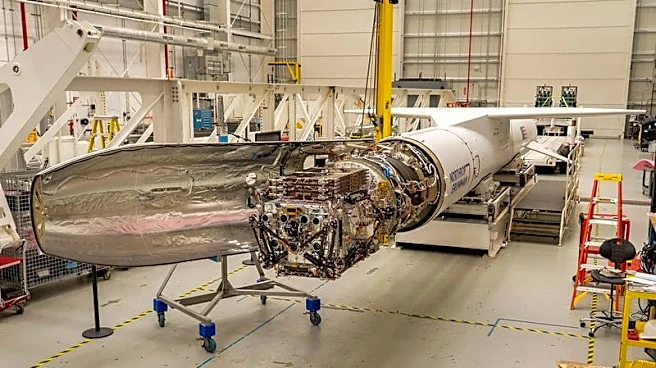
for rocket motors and other military technologies. Anduril, valued at $61 billion, has adopted bladeless mixers from the pharmaceutical industry to significantly increase the throughput of rocket motor propellant production. This innovation allows for a tenfold increase in production speed compared to traditional methods. Similarly, Castelion is utilizing automotive electronic components and fracking industry metal tubes to reduce costs and production times for its missile systems. These components, originally designed for advanced driver assistance systems and high-pressure fracking operations, are proving to be cost-effective and efficient alternatives to traditional aerospace materials.
Why It's Important?
The shift towards using automotive and fracking components in defense manufacturing represents a significant change in the defense industry's supply chain dynamics. By leveraging these industries' technologies, defense startups can produce weapons more quickly and at a lower cost, which is crucial for meeting the Pentagon's increasing demand for advanced military hardware. This approach not only challenges the traditional dominance of established defense contractors but also introduces a competitive edge for startups in securing lucrative government contracts. The ability to rapidly scale production and reduce costs could lead to a more agile and responsive defense sector, potentially reshaping the landscape of military procurement and innovation.
What's Next?
As defense startups continue to innovate, established defense contractors like Northrop Grumman and L3Harris are also investing in new technologies such as 3D printing to remain competitive. The ongoing competition between traditional defense companies and agile startups is likely to drive further advancements in production techniques and supply chain management. Additionally, the success of these startups in securing Pentagon contracts may encourage more investment in defense technology innovation, potentially leading to a broader transformation of the industry. Stakeholders, including government agencies and private investors, will be closely monitoring these developments to assess their impact on national security and economic growth.