









What's Happening?
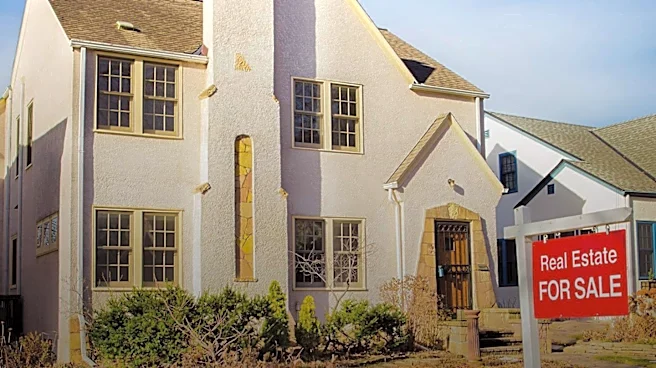
Short sales in the U.S. housing market are recovering more value than foreclosures, according to a report by Realtor.com. The number of short sales has been increasing for three consecutive years, with a 16% rise year-over-year in the first quarter of 2026.
Despite this growth, short sales remain a small segment of the market, accounting for less than 30,000 transactions in 2025. These sales represent 0.6% of typical home sales and 28% of distressed sales. The report suggests that short sales offer lenders a more favorable recovery option compared to foreclosures, as they recover approximately 9% more of a property's estimated value.
Why It's Important?
The shift towards short sales over foreclosures could have significant implications for the housing market and financial institutions. Short sales can help lenders recover more value, reduce the time a property remains distressed, and limit the negative impact on surrounding neighborhoods. This trend may also indicate a shift in how distressed properties are managed, potentially leading to more stable housing markets. For homeowners, short sales offer a way to avoid foreclosure, which can have long-term negative effects on credit scores and future borrowing capabilities.
What's Next?
As short sales continue to gain traction, lenders and real estate professionals may need to adapt their strategies to accommodate this trend. The extended approval process for short sales remains a challenge, but as more transactions occur, stakeholders may develop more efficient processes. Additionally, the geographic concentration of short sales in moderately priced metropolitan areas could create niche opportunities for real estate professionals specializing in distressed properties. Monitoring these developments will be crucial for understanding the evolving dynamics of the housing market.
Beyond the Headlines
The increase in short sales highlights the ongoing financial distress faced by some homeowners, despite a generally strong economy. This trend underscores the importance of providing support and resources to struggling homeowners to prevent further financial hardship. Additionally, the disparity in how short sales and foreclosures are distributed geographically suggests that local economic conditions play a significant role in housing market dynamics. Understanding these local factors could be key to developing targeted interventions to support distressed homeowners.