

What's Happening?
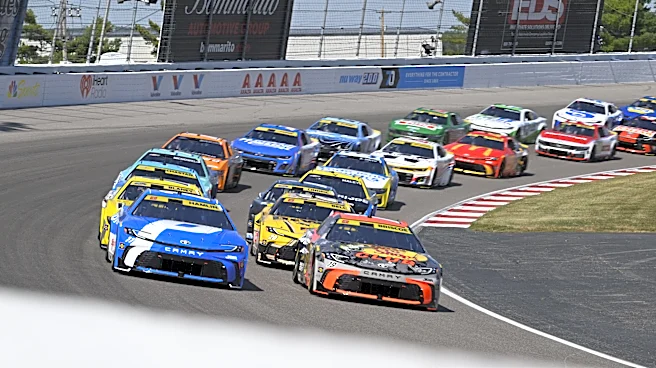
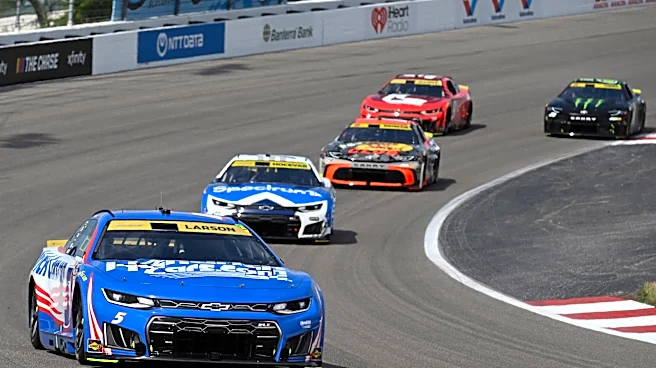
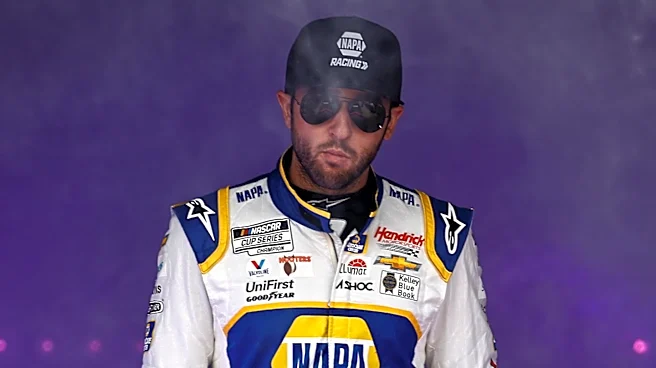
During the Enjoy Illinois 300 at World Wide Technology Raceway, NASCAR driver Chase Elliott experienced a brake rotor failure on Lap 213 while running sixth. This mechanical issue caused his No. 9 Chevrolet to slide into Turn 1, inadvertently collecting
Joe Gibbs’ Racing driver Chase Briscoe. Both drivers crashed into the wall, ending their races prematurely. Elliott finished 31st, and Briscoe finished 32nd. Elliott later apologized to Briscoe, acknowledging the incident was due to the brake failure, which he stated was out of his control. This event was part of a chaotic race that saw a record 18 cautions and two red flags, with multiple drivers, including Ryan Blaney and Chris Buescher, also suffering brake-related issues. Elliott expressed frustration, pointing blame towards NASCAR for the recurring brake problems at tracks like Gateway.
Why It's Important?
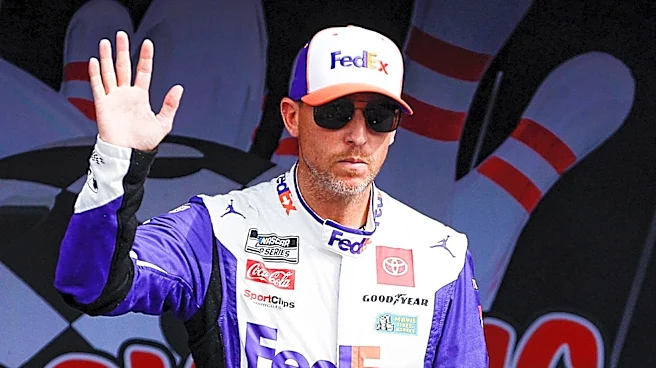
The brake rotor failure and subsequent crash had significant repercussions for both Chase Elliott and Chase Briscoe in the Chase for the NASCAR Cup Series standings. Elliott, a Hendrick Motorsports driver, dropped from eighth to 11th place, now trailing leader Denny Hamlin by 93 points. Briscoe also fell three spots in the standings, facing a 59-point deficit. These setbacks make their path to championship contention considerably more challenging with only eight races remaining. The recurring brake issues, also experienced by other prominent drivers like Ryan Blaney, raise concerns about vehicle safety and component reliability in NASCAR, especially with the increased 750 horsepower package for 2026. The incident highlights a potential systemic problem that could affect competitive balance and driver safety across the series, prompting calls from figures like Hendrick Motorsports vice chairman Jeff Gordon for NASCAR and manufacturers to collaborate on solutions.
What's Next?
Following the incident, the NASCAR Cup Series will proceed to Bristol, Tennessee, for the next race, which is the third event in the Chase playoff format. Both Chase Elliott and Chase Briscoe will need to deliver strong performances in the upcoming races to recover from the points deficit incurred at Gateway. Elliott, in particular, faces immense pressure to 'stop the bleeding immediately' to remain a viable championship contender. The broader issue of brake reliability at tracks with heavy braking zones, like Gateway and Nashville Superspeedway, is likely to be a focal point for NASCAR officials and teams. While Elliott has not directly demanded technical changes, the widespread nature of the brake failures suggests that NASCAR may need to review and potentially implement modifications to vehicle specifications or track requirements to ensure driver safety and fair competition. Discussions between NASCAR and manufacturers, as suggested by Jeff Gordon, are anticipated to address these concerns.
Beyond the Headlines
The series of brake failures at the Enjoy Illinois 300, particularly Chase Elliott's incident, underscores a deeper tension between performance demands and safety in professional racing. The introduction of a more powerful engine package in 2026, coupled with tracks known for heavy braking, appears to be pushing the limits of current braking technology. This situation raises questions about the balance NASCAR strikes between thrilling, high-speed competition and ensuring the structural integrity of critical vehicle components. The differing perspectives between drivers like Elliott, who points to NASCAR, and Ryan Blaney, who attributes issues to teams, highlight a potential disconnect in understanding and addressing these technical challenges. Ultimately, the long-term implications could involve significant engineering overhauls, stricter component regulations, or even track modifications to mitigate such risks, influencing the future design and safety protocols of NASCAR vehicles and races.