





What's Happening?
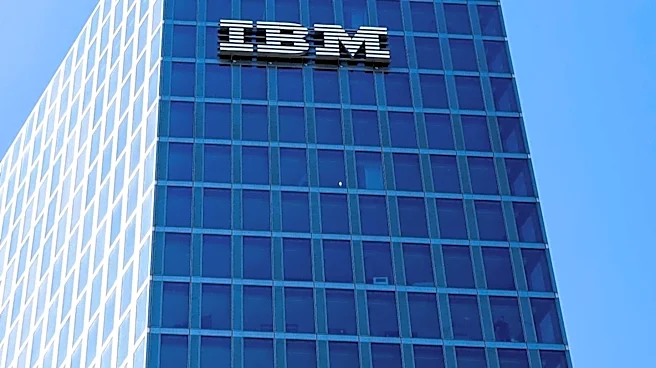
IBM experienced a significant stock market crash on July 14, 2026, with shares plummeting by 25.2% in a single day. This marked the worst trading day in the company's 115-year history, surpassing even the infamous Black Monday of 1987. The immediate trigger
was IBM's announcement of a $700 million shortfall in expected sales for the April-to-June quarter, which led to a loss of approximately $67 billion in market value. The decline reflects broader concerns about IBM's ability to compete in the rapidly evolving AI market, where it has struggled to maintain its early lead against competitors like Microsoft, Google, and Amazon.
Why It's Important?
IBM's stock market crash underscores the challenges faced by legacy technology companies in adapting to new market dynamics. Despite its historical significance and continued cash generation, IBM's inability to capitalize on the AI boom has raised questions about its future growth prospects. The company's struggles highlight the importance of innovation and strategic agility in maintaining competitive advantage. For investors, the crash serves as a reminder of the risks associated with relying on past performance as an indicator of future success.
What's Next?
IBM's management, led by CEO Arvind Krishna, has acknowledged the need for strategic adjustments to regain market confidence. The company is expected to focus on enhancing its AI offerings and partnerships to better compete in the market. Additionally, IBM's upcoming financial results and strategic initiatives will be closely scrutinized by investors and analysts. The company's ability to address its current challenges and demonstrate a clear path to growth will be critical in restoring investor trust and stabilizing its stock performance.