






What's Happening?
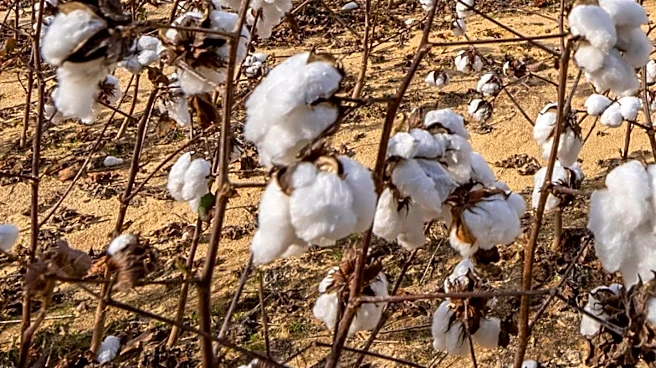
The Oklahoma cotton crop is facing severe deterioration due to persistent drought conditions and extreme heat. A staggering 55% of the state's cotton crop is currently rated in the worst condition category. While some isolated areas with sufficient irrigation
have managed to maintain good cotton crops, these instances are limited. Many producers did not have adequate water for irrigation, and dryland cotton fields have suffered from a lack of rainfall. The excessive growing degree days and prolonged periods of temperatures exceeding 100 degrees Fahrenheit have accelerated cotton development, pushing some fields to a harvest-ready state as early as mid-August, but in a compromised condition.
Why It's Important?
The severe deterioration of Oklahoma's cotton crop carries significant economic implications for the state's agricultural sector and individual farmers. Cotton is a key commodity, and such widespread crop failure can lead to substantial financial losses for producers, impacting their livelihoods and potentially contributing to higher commodity prices. This situation also highlights the vulnerability of agriculture to extreme weather events, underscoring the need for robust risk management strategies, including crop insurance. The challenges faced by Oklahoma cotton producers reflect a broader trend across the South and Midwest, where drought and heat are creating similar difficulties, potentially affecting national agricultural output and supply chains. The reliance on irrigation in some areas also brings into focus water resource management issues in the face of changing climate patterns.
What's Next?
Cotton producers in Oklahoma whose crops are failing or are expected to fail are being advised to contact their crop insurance adjusters as soon as possible. This immediate action is crucial for farmers to assess their losses and initiate the claims process, which can provide some financial relief. The long-term outlook for the Oklahoma cotton industry will depend on future weather patterns, particularly the return of consistent rainfall and more moderate temperatures. There may be increased discussions and research into drought-resistant cotton varieties, improved irrigation techniques, and other adaptive agricultural practices to mitigate the impact of similar extreme weather events in the future. Policy discussions around agricultural subsidies and disaster relief may also gain prominence.
Beyond the Headlines
The plight of the Oklahoma cotton crop extends beyond immediate economic losses, touching upon deeper issues of agricultural sustainability and climate resilience. The extreme weather conditions underscore the increasing pressure on farming communities to adapt to a changing climate, raising questions about the long-term viability of certain crops in traditionally productive regions. This situation could accelerate the adoption of precision agriculture technologies, water conservation methods, and diversification of crops to reduce dependence on single commodities. Furthermore, it highlights the interconnectedness of environmental health and economic stability, prompting a reevaluation of land use practices and the role of government support in fostering resilient agricultural systems. The experience of Oklahoma's cotton farmers serves as a stark reminder of the tangible impacts of climate variability on essential industries.