



What's Happening?
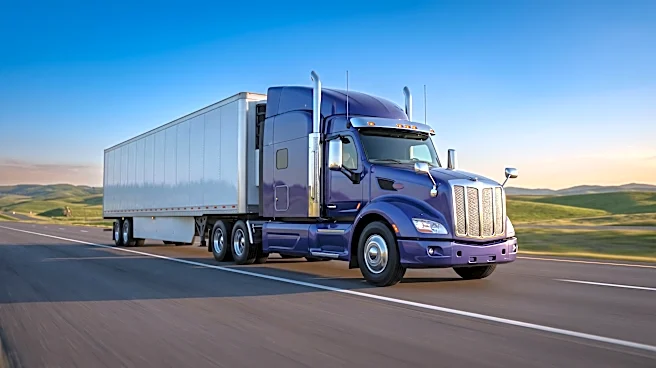
J.B. Hunt Transport Services, a prominent for-hire carrier, has announced an additional investment of $25 million in driver-related initiatives this quarter. This decision follows a warning to investors last quarter regarding the constrained pool of available
Commercial Driver's Licenses (CDLs). The company is addressing the ongoing shortage of qualified drivers by enhancing compensation and other benefits. Other major carriers, including Schneider National and Werner Enterprises, have made similar commitments to increase driver investments. Averitt Express also raised regional and less-than-truckload driver pay in July. This move by J.B. Hunt is a direct response to the industry-wide challenge of attracting and retaining truck drivers, which is crucial for maintaining supply chain efficiency and meeting transportation demands across the U.S. The investment aims to make the driving profession more attractive and sustainable for current and prospective drivers.
Why It's Important?
The investment by J.B. Hunt and other carriers highlights a critical issue impacting the U.S. economy: the persistent shortage of truck drivers. This shortage directly affects the logistics and supply chain sectors, which are vital for the movement of goods across the country. When the pool of available CDLs is constrained, it can lead to increased shipping costs, delays in delivery, and potential disruptions in the availability of consumer goods. By boosting driver wages and investing in driver-related initiatives, companies like J.B. Hunt are attempting to stabilize their workforce and ensure the continued flow of commerce. This trend could lead to higher operational costs for transportation companies, which may eventually be passed on to consumers. Conversely, it offers improved earning potential and job security for truck drivers, potentially attracting more individuals to the profession and alleviating some of the labor market pressures.
What's Next?
The immediate consequence of J.B. Hunt's investment is an increase in compensation and benefits for its drivers, which could set a precedent for other carriers to follow suit to remain competitive in the labor market. This could lead to a broader industry trend of improved driver pay and working conditions. If successful, these initiatives might help to mitigate the CDL shortage over time, potentially stabilizing freight rates and improving delivery times. However, the effectiveness of these investments will depend on various factors, including the overall economic climate, regulatory changes affecting the trucking industry, and the long-term appeal of the driving profession. Stakeholders, including other carriers, logistics companies, and consumers, will be closely watching to see if these efforts lead to a significant and sustainable increase in the driver pool and a more resilient supply chain.
Beyond the Headlines
The ongoing driver shortage and the industry's response, such as J.B. Hunt's investment, point to deeper structural issues within the U.S. labor market and the trucking industry. The demanding nature of the job, including long hours, time away from home, and regulatory pressures, has historically made it challenging to attract and retain drivers. This situation also underscores the critical, yet often overlooked, role of truck drivers in the national economy. The reliance on a robust trucking sector for virtually all goods consumed in the U.S. means that issues affecting drivers have far-reaching implications. This investment could also spur technological advancements aimed at improving driver comfort, safety, and efficiency, or even accelerate the development of autonomous trucking solutions as a long-term strategy to address labor constraints. The ethical dimension of fair compensation and working conditions for essential workers is also brought to the forefront.