





What's Happening?
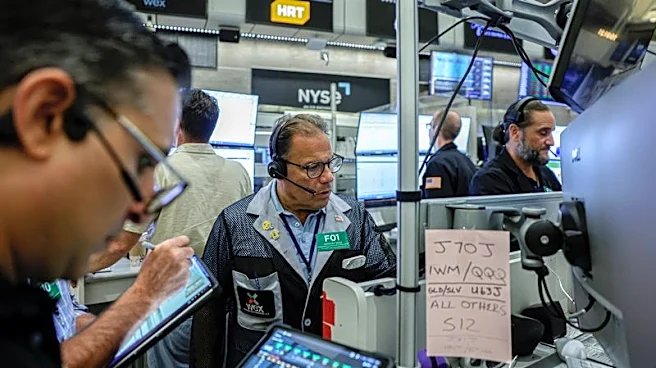
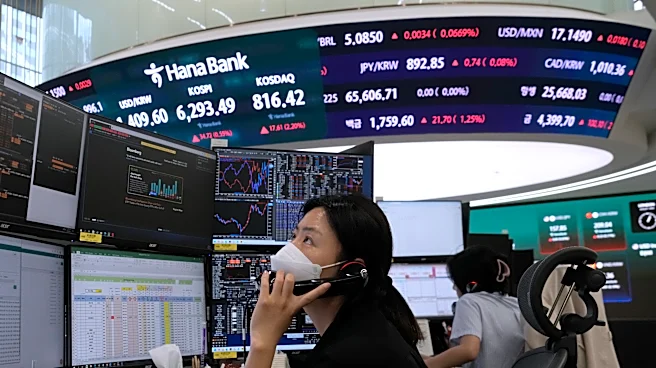
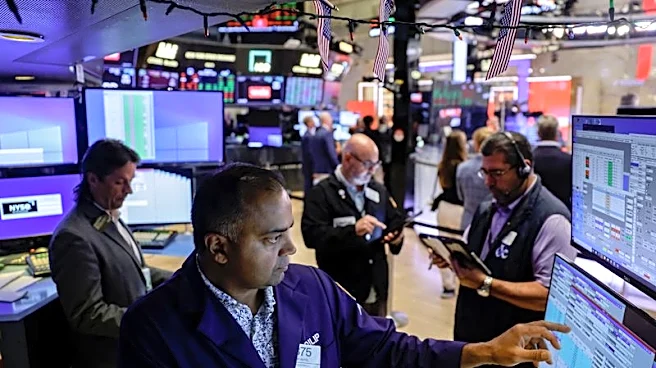
The U.S. stock market is hovering near its all-time high as of Monday, with oil prices on the rise due to uncertainties surrounding the reopening of the Strait of Hormuz. The S&P 500 experienced a slight decline of 0.1%, while the Dow Jones Industrial
Average and the Nasdaq composite both saw minor decreases. The recent rally in stocks has been driven by strong corporate earnings, with S&P 500 companies reporting a 50% increase in earnings per share compared to the previous year. Notably, Berkshire Hathaway reported stronger-than-expected profits, contributing to the positive market sentiment. However, Intel's announcement of a potential $15 billion stock sale led to a 4% drop in its share price, highlighting investor concerns about stock dilution.
Why It's Important?
The rise in oil prices due to the situation in the Strait of Hormuz has implications for inflation, which is a key concern for the Federal Reserve. Higher oil prices can lead to increased inflation, potentially influencing the Fed's decision on interest rates. A slowdown in inflation could reduce the pressure on the Fed to raise rates, which would be favorable for economic growth and stock market stability. Additionally, the strong corporate earnings reported by major companies indicate a robust economic recovery, which could bolster investor confidence and support further market gains.
What's Next?
The upcoming U.S. inflation report will be a critical factor in determining the Federal Reserve's monetary policy. A lower-than-expected inflation rate could ease concerns about rate hikes, while a higher rate might prompt the Fed to consider tightening monetary policy. Investors will also be watching for any developments regarding the Strait of Hormuz, as these could impact oil prices and global economic conditions. The market will continue to react to corporate earnings reports and geopolitical events, shaping the investment landscape in the coming weeks.