
What's Happening?
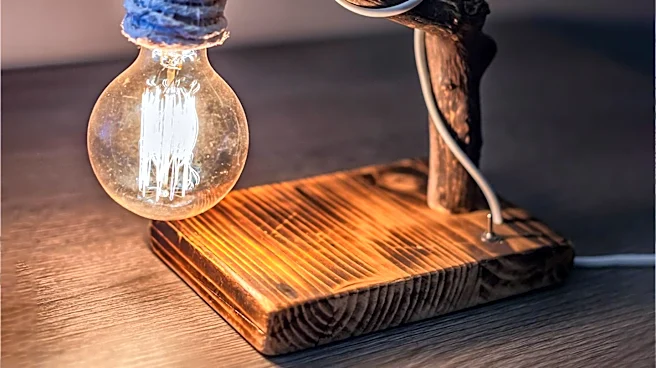
DIY enthusiasts are constructing modern wood LED desk lamps featuring hidden wiring and a minimalist design. This woodworking project, which can be completed in 2-3 hours, involves crafting a base, an upright,
and a horizontal light bar, typically using walnut wood for its aesthetic appeal. A key innovation in the design is the method for concealing wiring: instead of drilling a long hole, two 1x2 boards are glued together with a pre-routed groove between them to house the LED strip and its wiring. The project also details routing a channel in the horizontal arm for an aluminum LED channel and diffuser to ensure a flush finish. The process includes steps for cutting, gluing, sanding, and connecting the electrical components, making it a functional and visually appealing handmade item.
Why It's Important?
This DIY project is important as it empowers individuals to create custom, functional pieces of furniture, fostering self-sufficiency and practical skills in woodworking and basic electronics. The emphasis on hidden wiring and minimalist design reflects a growing consumer preference for clean aesthetics and integrated technology in home and office environments. By providing a detailed, step-by-step guide, the project democratizes access to design and manufacturing, allowing enthusiasts to produce high-quality items that might otherwise be expensive to purchase. Furthermore, using scrap wood, as suggested in the article, promotes sustainability by repurposing materials and reducing waste. This type of project can also inspire innovation in personalizing living spaces and encourages a deeper understanding of product construction and design principles.
What's Next?
The detailed instructions for this DIY wood LED desk lamp could lead to a surge in similar projects within the DIY community, potentially inspiring variations in wood types, dimensions, and LED functionalities (e.g., color-changing or smart-home integrated LEDs). Online platforms and woodworking forums may see increased sharing of modifications and improvements to the design. Manufacturers of woodworking tools and LED lighting components might experience a rise in demand for specific items mentioned in the tutorial, such as routers, straight-edge guides, and LED strips with connectors. This trend could also encourage more individuals to explore woodworking as a hobby, leading to a broader interest in crafting custom furniture and home accessories.
Beyond the Headlines
Beyond its immediate utility, the creation of a DIY wood LED desk lamp touches upon broader themes of craftsmanship and the value of handmade goods in a mass-produced world. It highlights the satisfaction derived from personal creation and the ability to tailor objects precisely to individual needs and aesthetic preferences. The project also serves as an educational tool, demystifying the process of combining woodworking with electrical components, thereby enhancing technical literacy. Culturally, it reinforces the idea that functional items can also be works of art, blending utility with design. This approach to home furnishing can foster a deeper appreciation for materials, design, and the labor involved in creating everyday objects, moving away from a purely transactional relationship with consumer goods.