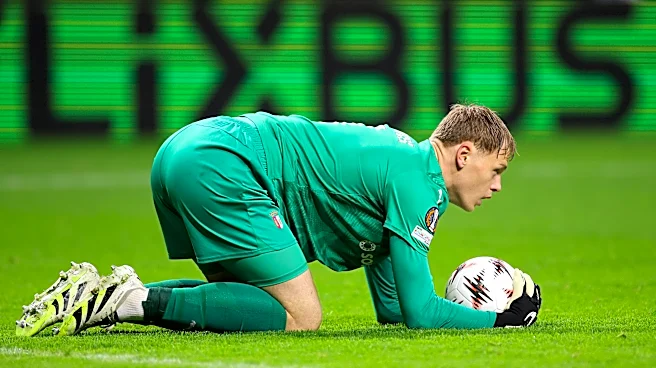








What's Happening?
English soccer is set to trial a new rule during the 2026-27 season aimed at curbing the misuse of goalkeeper injuries as tactical timeouts. This initiative, approved by the International Football Association Board (IFAB), will be implemented across men's
and women's professional leagues in England. Under the new rule, if play is stopped due to a goalkeeper injury, the team must nominate an outfield player to leave the pitch for at least one minute once play resumes. This measure is designed to deter teams from exploiting injury stoppages for tactical advantages, such as disrupting the game's momentum or providing tactical instructions. The trial is part of a broader effort to enhance game flow and maintain player welfare, with additional measures including time limits on throw-ins and substitutions.
Why It's Important?
The introduction of this rule is significant as it addresses a growing concern in professional soccer regarding the strategic use of injury stoppages. By enforcing a mandatory exit for an outfield player, the rule aims to reduce the frequency of feigned injuries, which have been criticized for disrupting the flow of the game and providing unfair advantages. This change could lead to a more continuous and engaging experience for fans and ensure fair play. The trial reflects a broader trend in sports to enhance the integrity of the game and improve the spectator experience by minimizing unnecessary delays.
What's Next?
The trial will commence with the opening round of the League Cup on August 1, 2026. Throughout the season, the effectiveness of the rule will be monitored by the FA, IFAB, and other stakeholders. Feedback from these observations will likely influence whether the rule becomes a permanent fixture in the Laws of the Game. The soccer community, including managers, players, and fans, will be closely watching the trial's impact on game dynamics and player behavior.