







What's Happening?
The distinction between starchy and nonstarchy vegetables is crucial for blood sugar management, a significant health concern in the U.S. Nonstarchy vegetables, including leafy greens, broccoli, and peppers, are low in carbohydrates (under 5 grams per serving)
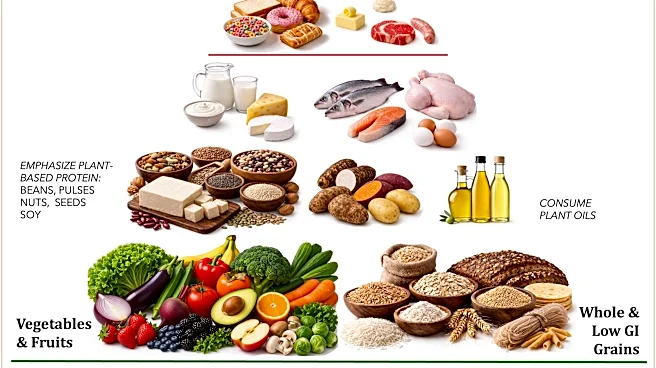
and have minimal impact on blood glucose. They are rich in fiber, vitamins, minerals, and antioxidants, supporting metabolic health and reducing the risk of type 2 diabetes. Starchy vegetables like potatoes, corn, and peas, while nutrient-dense, contain more carbohydrates and can cause a greater blood sugar response. However, they are not inherently 'bad' and can be part of a healthy diet. Preparation methods significantly influence their effect; for instance, cooking and then chilling starchy vegetables like potatoes or rice increases resistant starch, which slows digestion and blunts blood sugar spikes. Prioritizing fiber intake, which nearly 95% of Americans do not meet, through nonstarchy vegetables, legumes, and whole grains, is essential for long-term blood sugar control.
Why It's Important?
This information is vital for the millions of Americans managing diabetes or prediabetes, as well as the broader public seeking to maintain healthy blood sugar levels. The nuanced understanding that both starchy and nonstarchy vegetables have a place in a healthy diet, with specific considerations for preparation and portion size, can empower individuals to make informed dietary choices. For the U.S. food industry, this highlights a demand for products that support blood sugar management, potentially influencing food processing and labeling. Healthcare providers and dietitians can use this guidance to offer more precise and effective dietary counseling, moving beyond simple 'good' or 'bad' food classifications. Addressing the widespread fiber deficiency in the U.S. population through increased consumption of these vegetables could have significant public health benefits, reducing the burden of chronic diseases linked to poor glycemic control.
What's Next?
Expect continued emphasis on dietary education regarding vegetable types and preparation methods for blood sugar control. Food manufacturers may innovate with products that enhance resistant starch content or offer convenient, fiber-rich nonstarchy vegetable options. Public health initiatives might focus on increasing fiber intake across the U.S. population. Research will likely continue to explore individual responses to carbohydrates, considering factors like gut health and overall diet quality. Dietitians and certified diabetes care and education specialists will remain key resources for personalized guidance, helping individuals integrate both types of vegetables effectively into their meal plans to achieve better glycemic control and overall health.
Beyond the Headlines
The discussion on starchy versus nonstarchy vegetables reflects a broader shift in nutritional science towards a more holistic and personalized approach to diet. It moves away from rigid food restrictions and instead emphasizes understanding how different foods interact with the body and how preparation can alter their physiological effects. This perspective encourages a more flexible and sustainable approach to healthy eating, acknowledging that dietary needs vary among individuals. It also underscores the importance of culinary practices in health outcomes, suggesting that how food is prepared can be as significant as what food is chosen. This evolving understanding has implications for food policy, nutritional education, and the development of dietary guidelines that are both effective and adaptable to diverse populations.