




What's Happening?
Hollywood's increasing reliance on reboots and adaptations of established franchises, such as 'Harry Potter,' 'Percy Jackson,' and the Marvel Cinematic Universe (MCU), is drawing criticism from audiences and industry figures. The 'Harry Potter' reboot,
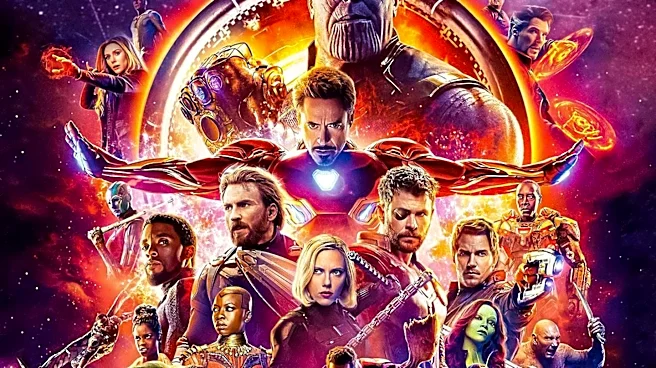
in particular, faces significant backlash due to author J.K. Rowling's vocal opposition to transgender rights and her financial backing of related legal challenges. Despite public disagreement from some cast members and directors, HBO has made Rowling an executive producer, potentially earning her substantial income. The 'Percy Jackson' series, while praised for its faithfulness to the books, is seen by some as a watered-down version of the original material. Meanwhile, the MCU is planning a 'reset' after 'Avengers: Secret Wars' in 2027, including recasting iconic characters like Tony Stark and Steve Rogers, leading to questions about the longevity and creative direction of the franchise. Critics argue that this trend reflects a lack of original ideas and a preference for capitalizing on existing nostalgia.
Why It's Important?
This trend of reboots and adaptations has significant implications for the U.S. entertainment industry. It highlights a tension between commercial viability and artistic integrity, as studios prioritize familiar intellectual property to minimize financial risk. The controversy surrounding J.K. Rowling underscores the growing ethical considerations for consumers and creators, forcing a debate on whether to separate an artist's personal beliefs from their work, especially when those beliefs are actively funded. For the industry, it raises questions about talent retention and creative freedom, as directors and actors may choose to distance themselves from projects associated with controversial figures. For audiences, it can lead to 'franchise fatigue' and a sense that beloved stories are being exploited rather than thoughtfully reinterpreted. This approach also limits opportunities for new, original content to emerge, potentially stifling innovation and diversity in storytelling.
What's Next?
The entertainment industry is likely to continue navigating the complex landscape of reboots and adaptations, balancing audience demand for nostalgia with calls for original content and ethical production practices. For the 'Harry Potter' reboot, the ongoing public discourse around J.K. Rowling's views will likely influence its reception and potential commercial success. The 'Percy Jackson' series may continue to refine its approach based on audience feedback regarding its tone and faithfulness to the source material. The MCU's planned 'reset' will be a critical juncture, determining whether a new generation of characters and storylines can successfully reinvigorate the franchise or if it will alienate long-time fans. Studios may face increasing pressure to address the ethical implications of their collaborations and to invest more in diverse, original storytelling to avoid further audience alienation and creative stagnation.
Beyond the Headlines
Beyond the immediate commercial and critical reception, the prevalence of reboots reflects a deeper cultural phenomenon: the commodification of nostalgia. In an increasingly fast-paced and uncertain world, familiar stories offer comfort and a sense of continuity. However, this reliance on past successes can inadvertently stifle the creation of new cultural touchstones for future generations. The ethical dilemmas, particularly with the 'Harry Potter' reboot, highlight a growing consumer awareness and demand for accountability from creators and corporations. This extends beyond individual artists to the broader responsibility of media conglomerates in shaping public discourse and values. The debate also touches upon the nature of intellectual property and whether the original intent and values of a story can be maintained or reinterpreted without compromising its essence or the integrity of its creators. This ongoing tension between preserving legacy and fostering innovation will continue to shape the future of entertainment.