








What's Happening?
Advanced Micro Devices (AMD) is set to invest $1 billion in Meta's equity offering, signaling a significant deepening of their existing partnership in AI infrastructure. This investment comes as initial AMD Helios systems are installed and undergoing
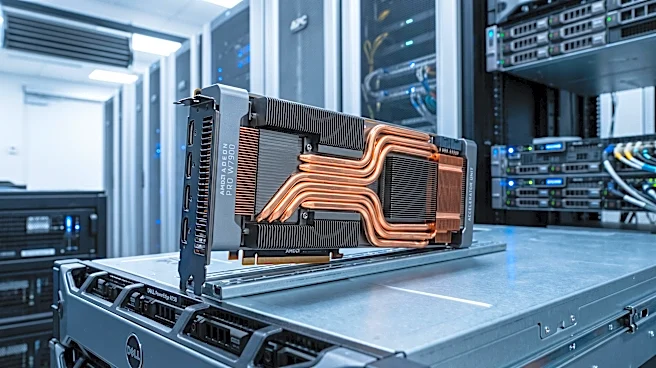
testing at Meta, marking a key milestone in an agreement that could encompass up to 6 gigawatts of AI infrastructure. The collaboration extends beyond current systems, with AMD CEO Lisa Su stating that they are building and deploying infrastructure at 'gigawatt scale' to support Meta's ambitious superintelligence models and services. This financial commitment from AMD adds a new dimension to their relationship, which already involves joint hardware and software development, including Meta's use of AMD EPYC processors and Instinct GPUs, and plans for a custom Instinct GPU optimized for Meta's workloads. The companies have not yet disclosed the number of Helios systems being tested, the timeline for broader deployment, or how quickly they expect to reach gigawatt scale.
Why It's Important?
This investment and expanded partnership are crucial for both AMD and Meta, and have broader implications for the AI and semiconductor industries. For AMD, it solidifies its position as a key player in the burgeoning AI hardware market, directly challenging Nvidia's dominance. By investing in Meta, AMD is putting its balance sheet behind a major customer's AI buildout, creating a shared interest in the partnership's success. This move could accelerate the adoption of AMD's AI accelerators and rack-scale systems, demonstrating their viability at scale. For Meta, the partnership supports its multi-vendor infrastructure strategy, reducing reliance on a single supplier and providing options for matching hardware to specific workloads. This approach is vital for managing supply chain risks and optimizing performance for its diverse AI needs. The collaboration also highlights the immense capital and technological coordination required to build out AI infrastructure at gigawatt scale, setting a precedent for future large-scale AI deployments across the industry.
What's Next?
The immediate next steps involve the continued testing and eventual broader deployment of AMD Helios systems within Meta's infrastructure. The success of these initial deployments will be critical in validating AMD's technology and its ability to deliver at the required scale. Industry observers will be closely watching for updates on deployment timelines and the performance of these systems. AMD's ability to demonstrate that its ROCm software stack can support a wider range of customers and workloads, similar to Nvidia's CUDA ecosystem, will also be a key factor in its future success. Furthermore, the partnership's progress will likely influence other major tech companies' decisions regarding their AI hardware suppliers, potentially leading to increased competition and diversification in the AI chip market. The financial commitment also raises questions about the relationship between financing and future business, and whether this model will become more prevalent in the capital-intensive AI infrastructure sector.
Beyond the Headlines
This strategic investment by AMD in Meta goes beyond a typical supplier-customer relationship, hinting at a deeper integration and shared risk model in the high-stakes AI race. It underscores the massive financial and technological commitments required to build and sustain cutting-edge AI capabilities. The partnership also highlights the growing trend of major tech companies diversifying their AI hardware suppliers to mitigate risks and foster innovation, rather than relying on a single vendor. The challenge for AMD will be to prove its ability to deliver, integrate, and support these complex rack-scale systems reliably at scale, especially in areas like networking performance and software maturity, where Nvidia currently holds an advantage. This collaboration could also set a new standard for how semiconductor companies and large-scale AI developers co-invest and co-develop, potentially reshaping the competitive landscape and supply chain dynamics within the AI industry for years to come.