

What's Happening?
NASCAR driver Ross Chastain recently recounted his emotional reaction to the news in June 2021 that Justin Marks was purchasing Chip Ganassi Racing. Chastain, who was just a year into his NASCAR Cup Series career with Ganassi, believed this acquisition
signaled the end of his top-level racing aspirations. He described his immediate thought as, “I’m out. It’s over again.” This sentiment stemmed from his challenging journey to reach the Cup Series, having spent years competing with underfunded teams. The 2021 season was intended to be his opportunity to prove his worth, but it was marked by a steep learning curve and inconsistent results, including a runner-up finish at Nashville but also 39th and 37th place finishes at Daytona and Charlotte, respectively. This made the prospect of becoming a free agent particularly daunting for Chastain, who had no 'Plan B' outside of racing.
Why It's Important?
This revelation highlights the immense pressure and uncertainty faced by drivers in the highly competitive world of NASCAR, particularly those without established financial backing or long-term contracts. Chastain's experience underscores how quickly a driver's career trajectory can be perceived to change due to ownership shifts or team consolidations. His initial despair, despite eventually securing a spot with Trackhouse Racing, illustrates the precarious nature of professional sports careers and the constant need for drivers to prove their value. For team owners and sponsors, this narrative emphasizes the human element behind business decisions in racing and the significant impact these decisions have on individual athletes' lives and careers. It also sheds light on the mental fortitude required to navigate such a demanding environment, where a single business transaction can feel like a career-ending blow.
What's Next?
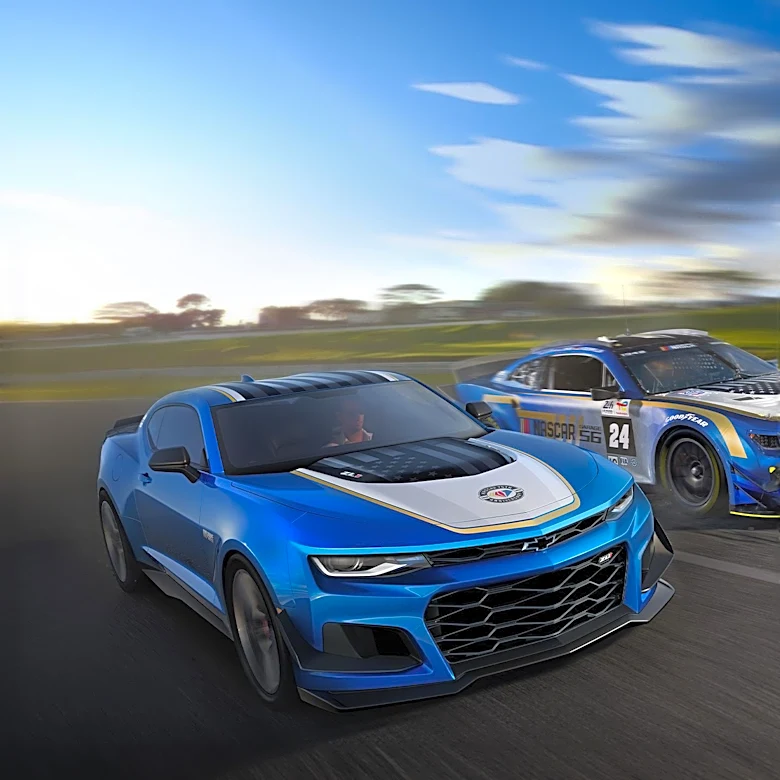
Despite his initial fears, Ross Chastain ultimately secured a position with Trackhouse Racing, driving the No. 1 Chevrolet Camaro ZL1 starting in 2022, alongside Daniel Suárez. He has since become a lead driver for the team. However, his contract with Trackhouse is set to expire after 2027, and with emerging talents like Connor Zilisch joining Hendrick Motorsports, there is ongoing speculation about Chastain's future. Teams in the garage are reportedly looking to attract talented drivers, suggesting that Chastain's long-term tenure at Trackhouse remains a topic of discussion. The coming years will likely see negotiations and strategic decisions from both Chastain and Trackhouse Racing regarding his contract extension or potential moves, as the team aims to retain its key talent while Chastain seeks career stability and competitive opportunities.
Beyond the Headlines
Chastain's story delves into the psychological toll of uncertainty in high-stakes professions. His candid admission of an 'emotional meltdown' reveals the vulnerability even top athletes experience when their careers hang in the balance. This goes beyond mere job security; for many drivers, racing is not just a profession but an identity, making the threat of its loss deeply personal. The narrative also subtly critiques the cutthroat nature of professional sports, where individual careers can be dramatically altered by corporate mergers and acquisitions, often with little warning or consideration for the athletes involved. It underscores the need for mental resilience and adaptability in a sport where external factors can be as impactful as on-track performance, highlighting the broader human experience within the competitive landscape of NASCAR.