







What's Happening?
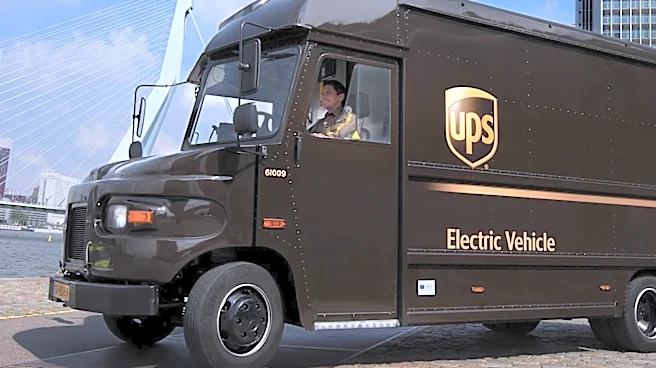
UPS CEO Carol Tomé has reiterated the company's commitment to a stable and growing dividend, despite a high cash dividend payout ratio of 99% over the last twelve months. UPS paid out $5.41 billion in dividends from a free cash flow of $5.46 billion during
this period. This year, UPS maintained its quarterly dividend at $1.64, ending a streak of annual increases that began in 2010. The company now states it has either maintained or increased its dividend every year since its 1999 IPO. This contrasts with FedEx, which offers a lower dividend yield but has a more comfortable payout ratio of 27% in its last fiscal year. UPS has also been strategically reducing its Amazon volume by more than half compared to 2024 and closing facilities, a process completed in June. This strategy has led to a 3.3% decrease in U.S. volume in the second quarter, but a 9.3% increase in revenue per shipment and a 21% jump in adjusted operating profit for its U.S. domestic business.
Why It's Important?
The dividend strategy of major logistics companies like UPS is crucial for investors, particularly those seeking income. UPS's high payout ratio, where nearly all free cash flow is distributed as dividends, signals a potential lack of financial flexibility for reinvestment or weathering economic downturns without impacting shareholder returns. While the company's strategic shift away from lower-margin Amazon volume has shown positive results in revenue per shipment and operating profit, the tight margin between free cash flow and dividend payments raises questions about the sustainability of dividend growth. For the broader U.S. economy, the performance and strategies of shipping giants like UPS are indicators of consumer spending and business activity. A strong, stable dividend can attract investors, but a strained payout ratio could deter them if economic conditions worsen, potentially affecting the company's stock performance and access to capital.
What's Next?
UPS plans to continue its current dividend strategy, aiming for approximately $5.4 billion in dividends from an estimated $5.5 billion in free cash flow this year. This free cash flow projection includes about $1.1 billion in one-time severance payments for drivers, and the company does not plan for stock buybacks. The risk remains that in a weak year for shipping, a portion of the dividend might need to be financed from the balance sheet. Investors will closely monitor UPS's free cash flow generation and its ability to maintain its dividend commitment, especially as the company continues its network optimization efforts. The upcoming financial reports will provide further insight into the effectiveness of its strategy to prioritize higher-margin business and its impact on long-term financial health and dividend sustainability.
Beyond the Headlines
The contrasting dividend strategies of UPS and FedEx highlight different approaches to shareholder returns and financial management within the competitive logistics sector. UPS's decision to maintain a high dividend payout, even at the expense of ending a long-standing streak of annual increases, suggests a strong commitment to its income-focused investors. However, this approach could limit the company's agility in responding to market shifts or investing in future growth initiatives without incurring debt. The strategic reduction of Amazon volume by UPS reflects a broader trend among logistics providers to optimize their networks for profitability rather than sheer volume, potentially leading to a more resilient business model in the long run. This shift could also influence pricing and service levels across the industry, impacting businesses and consumers reliant on shipping services.