





What's Happening?
Higharc, an AI-driven homebuilding platform, and ECI Software Solutions, a provider of cloud-based business software, have released a new integration connecting Higharc’s 3D home design and configuration platform with ECI’s MarkSystems ERP. This integration is designed
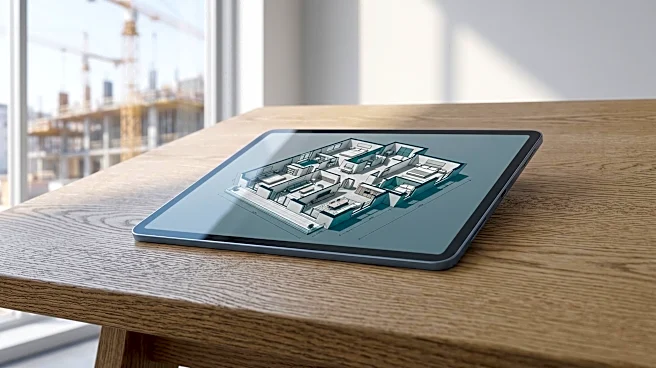
for production homebuilders to streamline workflows by synchronizing 3D home designs, options, and pricing directly with ERP systems. The goal is to reduce manual data entry, minimize errors, and decrease rework throughout the homebuilding process. The connection aims to bridge the gap between sales, design, and construction operations, ensuring that what is sold accurately reflects what is built. Key features include pricing synchronization from MarkSystems into Higharc, allowing buyers to configure homes with real-time pricing, and automatic generation of contract information in MarkSystems from finalized Higharc configurations. This integration is already being utilized by New Home Inc., a Carolinas-based builder, across its sales and construction operations.
Why It's Important?
This integration is significant for the U.S. homebuilding industry as it addresses critical inefficiencies that often lead to margin erosion, delays, and rework. Production homebuilders frequently face challenges in maintaining consistent data across various departments, from sales and marketing to purchasing and construction. Manual data re-entry between design platforms and ERP systems creates opportunities for discrepancies in pricing, plan configurations, and buyer selections. By automating this data flow, the Higharc-MarkSystems integration aims to enhance accuracy, speed up the sales-to-construction cycle, and improve overall project profitability. For builders, this means a tighter link between sales contracts, purchase orders, and actual construction, reducing costly mistakes and unexpected variances. The ability to provide buyers with real-time, accurate pricing during the design phase also improves customer experience and confidence, which is crucial in a competitive housing market. This technological advancement supports greater operational efficiency and better financial outcomes for homebuilders.
What's Next?
Homebuilders interested in the Higharc-MarkSystems integration can learn more at ECI Connect, ECI’s customer conference starting November 16, where representatives from both companies will be available for discussions and demonstrations. Builders not attending the event can schedule personalized demonstrations. The adoption of this integration is expected to grow among production homebuilders seeking to modernize their operations and improve efficiency. As more builders implement such integrated solutions, the industry may see a broader shift away from traditional, siloed workflows towards more connected and data-driven processes. This could lead to increased demand for similar integrations across other software platforms in the construction technology sector. The success of this integration could also encourage further collaboration between design and ERP software providers, fostering a more integrated tech ecosystem for the homebuilding industry. Ultimately, this trend points towards more streamlined, cost-effective, and transparent home construction processes.
Beyond the Headlines
The collaboration between Higharc and ECI Software Solutions represents a deeper trend in the construction industry: the increasing reliance on integrated digital tools to manage complex projects. Historically, homebuilding has been characterized by fragmented processes and manual data handling, leading to significant inefficiencies. This integration signifies a move towards a more holistic, data-centric approach where design, sales, and operational data are seamlessly connected. This not only improves operational efficiency but also enhances decision-making by providing real-time insights into project status and costs. Furthermore, the use of 3D configurators with live pricing empowers buyers, making the home personalization process more transparent and engaging. This shift could also have long-term implications for labor efficiency and skill requirements within the construction sector, as digital proficiency becomes increasingly vital. The ethical implication lies in ensuring data accuracy and security across integrated platforms, as any flaw could have significant financial repercussions for builders and impact customer satisfaction.