





What's Happening?
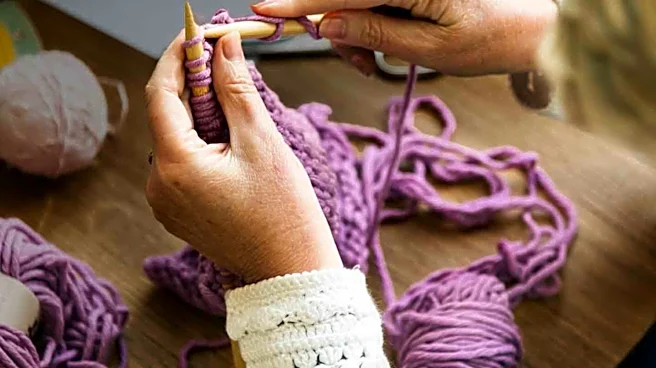
Traditional 'grandma hobbies' such as knitting, crocheting, embroidery, and visible mending are experiencing a significant resurgence, particularly among Gen Z and younger millennials. This trend, falling under the 'grandmacore' aesthetic, is driven by
screen fatigue and a desire for offline activities that offer tangible results. According to the Michaels 2026 Creativity Trend Report, searches for analog hobbies surged by 136% in six months, and yarn accessory sales increased by 40% year over year. Michaels has even declared 2026 the 'Year of Creative Living.' Younger crafters are discovering these activities through social media platforms like TikTok and Instagram, then transitioning to offline engagement, often participating in craft clubs and workshops. This movement also reflects a pushback against fast fashion and AI-generated sameness, emphasizing sustainability and personal, handmade items.
Why It's Important?
The growing popularity of 'grandma hobbies' among younger generations signifies a notable cultural shift away from constant digital engagement towards more tactile and mindful activities. This trend has implications for various industries, including retail, where demand for craft supplies, yarn, and DIY kits is increasing. It also impacts social dynamics, as craft clubs and workshops provide new avenues for offline community building and combating loneliness, a recognized public health issue. Economically, this movement supports a 'repair culture' and sustainability, potentially influencing consumer spending habits towards more durable and personally customized goods rather than disposable fast fashion. The emphasis on creating 'something to actually hold' at the end of the day highlights a psychological need for tangible accomplishments and a break from the abstract nature of digital interactions, suggesting a broader re-evaluation of how leisure time is spent.
What's Next?
The continued growth of 'grandma hobbies' is likely to lead to further expansion in the craft and DIY markets. Retailers like Michaels can expect sustained demand for materials and may introduce more classes and community-focused events. Social media platforms will continue to play a role in popularizing these crafts, with creators sharing tutorials and inspiring new participants. We may see an increase in 'craft cafes' or dedicated spaces for communal crafting, fostering social connections. The trend's alignment with sustainability and anti-fast fashion sentiments could also influence fashion and design industries, promoting more handmade, customized, and repaired clothing items. Additionally, as more people seek 'offline time' and 'calm accomplishments,' there could be a broader societal embrace of hobbies that offer mental well-being benefits, potentially leading to new wellness programs centered around creative activities.
Beyond the Headlines
The resurgence of 'grandma hobbies' delves deeper than just a trend; it represents a profound societal response to the pervasive digital environment and its associated challenges, such as screen fatigue and feelings of disconnection. By engaging in activities like knitting or crocheting, individuals are not only seeking a break from screens but also reclaiming a sense of agency and personal expression in a world often dominated by mass production and artificial intelligence. This movement challenges the notion that productivity must always be digital or fast-paced, instead valuing the slow, deliberate process of creation. It also fosters intergenerational connections, as younger individuals learn skills traditionally associated with older generations. The emphasis on visible mending and handmade items also carries an ethical dimension, promoting sustainability and a conscious rejection of disposable culture, thereby contributing to a more thoughtful and environmentally aware lifestyle.