






What's Happening?
Jahmy Hindman, the Chief Technology Officer of Deere & Company, was recently interviewed by CNBC’s Morgan Brennan. The discussion focused on Deere's new JD AI assistant, advancements in precision agriculture, and the broader economic outlook for farmers.
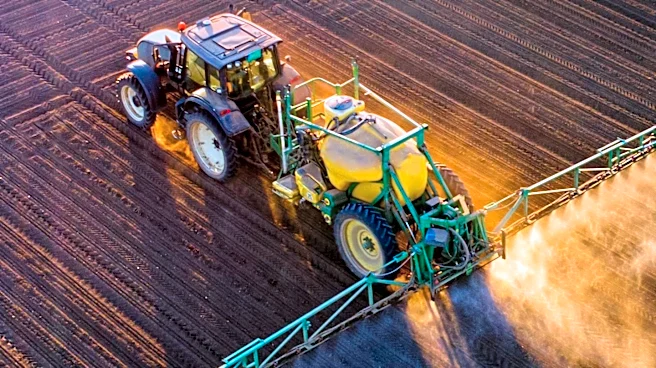
Hindman provided insights into how artificial intelligence is being integrated into agricultural machinery and practices to enhance efficiency and productivity. The interview highlighted Deere's strategic initiatives to leverage technology to address challenges faced by the agricultural sector, such as rising farm costs and the need for increased output. This engagement underscores the growing importance of technological innovation in traditional industries like agriculture, as companies seek to optimize operations and support their customer base through advanced solutions. The conversation also touched upon the potential impact of these technological shifts on the future of farming.
Why It's Important?
This interview is significant for several reasons, particularly for the U.S. agricultural sector and the technology industry. The introduction of the JD AI assistant and the focus on precision agriculture by a major player like Deere & Company signal a transformative period for farming. Enhanced productivity through AI can lead to more efficient resource management, potentially lowering operational costs for farmers and increasing crop yields. This could have a direct positive impact on food security and the economic stability of agricultural communities across the U.S. For the technology sector, it demonstrates the expanding applications of AI beyond conventional tech industries, opening new markets and opportunities for innovation. Furthermore, the adoption of such technologies could influence policy discussions around agricultural subsidies, environmental sustainability, and rural economic development, as the landscape of farming evolves with these technological advancements. Stakeholders in both agriculture and technology stand to gain from these developments, while those resistant to change might face competitive disadvantages.
What's Next?
Following the discussion, it is anticipated that Deere & Company will continue to roll out and refine its JD AI assistant and other precision agriculture technologies. Future developments may include further integration of AI with other farming equipment, expanded data analytics capabilities for farmers, and potential partnerships with tech firms to accelerate innovation. The insights shared by Jahmy Hindman could also influence investment trends in agricultural technology, attracting more capital to startups and research initiatives focused on smart farming solutions. Farmers are likely to see more advanced tools becoming available, requiring ongoing education and adaptation to new methods. Policy discussions may also emerge regarding the ethical implications of AI in agriculture, data privacy for farmers, and the need for infrastructure to support these high-tech farming practices. The long-term outlook suggests a continued shift towards data-driven and automated agricultural operations.
Beyond the Headlines
The deeper implications of Deere's advancements in AI and precision agriculture extend to the very nature of farming and rural life in the U.S. The increasing reliance on sophisticated technology could lead to a more specialized and capital-intensive agricultural industry, potentially marginalizing smaller farms that cannot afford the upfront investment. This raises ethical questions about equitable access to technology and its potential impact on the diversity of farming operations. Culturally, the image of the American farmer might evolve from a traditional laborer to a tech-savvy operator, necessitating new skill sets and educational pathways. Legally, the ownership and use of agricultural data generated by AI systems could become a significant area of contention, requiring new regulations to protect farmers' interests. Ultimately, these technological shifts could trigger long-term changes in land use, rural demographics, and the economic structure of agricultural regions, reshaping the future of food production in the nation.