



What's Happening?
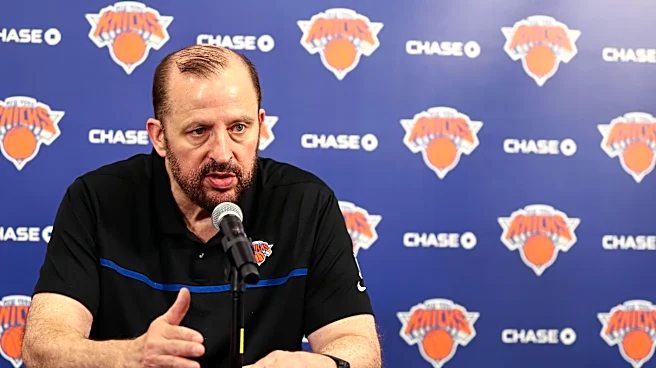
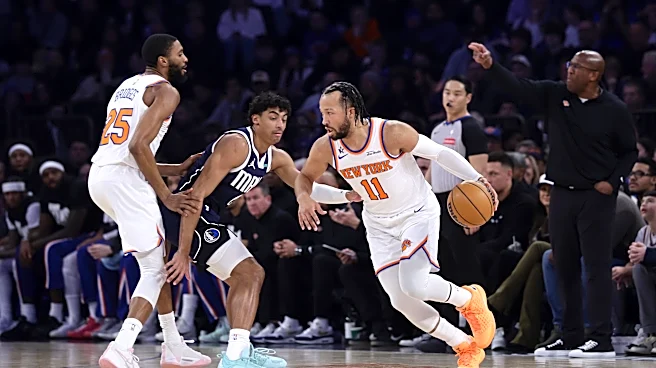
New York Knicks head coach Mike Brown has adopted an aggressive strategy of benching starting wing Mikal Bridges earlier in games during the team's title defense season. This approach marks a shift from last season, where Bridges was benched in favor
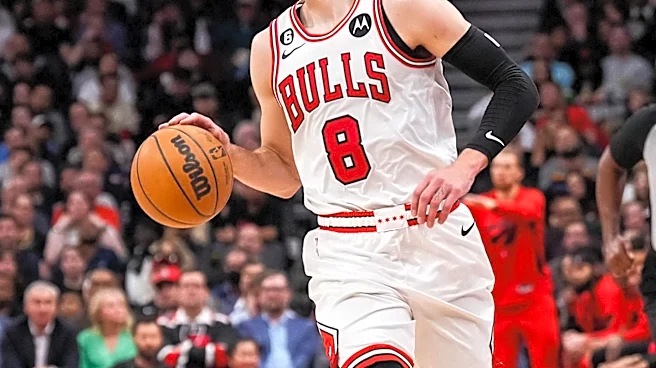
of Landry Shamet in the fourth quarter on seven occasions. This season, Brown has been removing Bridges from games even earlier, sometimes as early as the third quarter. For instance, against the Boston Celtics, Bridges sat the final 8:25 of the contest, and in the season opener against the Chicago Bulls, he left the game with 8:09 remaining in the third quarter. This decision comes despite Bridges having signed a four-year, $150 million contract extension and having been a key defensive contributor during the Knicks' championship run last season.
Why It's Important?
Coach Brown's assertive benching of Mikal Bridges signals a heightened commitment to maintaining a championship standard within the team, even at the expense of a high-profile starter. This move indicates that no player, regardless of contract or past performance, is immune to accountability when the team's performance is not meeting expectations. It sends a clear message to the entire roster about the intensity and focus required to defend an NBA title, especially in a competitive Eastern Conference. For Bridges, this could serve as a strong motivator to improve his early-season struggles, particularly on offense. For the team, it emphasizes depth and the readiness of bench players like Landry Shamet to step up, potentially fostering a more competitive internal environment and ensuring that only the most effective lineups are on the court during crucial moments.
What's Next?
The aggressive benching strategy for Mikal Bridges is likely to continue if his performance does not improve, particularly in the early stages of games. This could lead to increased playing time for Landry Shamet or other reserves who demonstrate consistent effort and effectiveness. The situation will put pressure on Bridges to elevate his game and prove his value as a starter, especially given his significant contract. Coach Brown's willingness to make tough lineup decisions early in the season suggests that he is prepared to experiment and adapt to find the most successful combinations for the team's title defense. Fans and analysts will be closely watching how Bridges responds to this challenge and whether these strategic benchings ultimately lead to improved team performance and individual play.
Beyond the Headlines
This situation highlights the unique pressures and demands of defending an NBA championship. The bar for performance is significantly raised, and coaches often employ more stringent measures to maintain focus and intensity. Brown's decision to bench Bridges early, despite his contract and previous contributions, underscores a 'win-now' mentality where individual status takes a backseat to collective success. It also reflects the evolving nature of player management in the modern NBA, where coaches are increasingly willing to make bold lineup changes based on real-time performance and strategic matchups. This approach could have long-term implications for team dynamics, potentially fostering a culture of constant competition for minutes and roles, which could either galvanize the team or create internal friction. Ultimately, it's a high-stakes gamble aimed at ensuring the team remains at the pinnacle of the league.