





What's Happening?
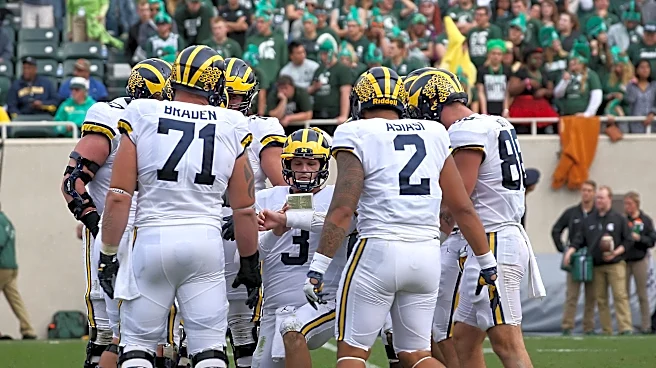
The Michigan Wolverines football team experienced a decisive 31-7 loss to the No. 16 Oregon Ducks on November 14, 2026, at Autzen Stadium in Eugene, Oregon. This defeat brings Michigan's season record to 5-5, intensifying scrutiny around head coach Kyle
Whittingham's position. The Wolverines' offense struggled, leading to the mid-week firing of offensive coordinator Jason Beck prior to the game. Oregon's offense, led by quarterback Dylan Raiola, scored early and consistently, with touchdowns including a 60-yard pass to Jeremiah McClellan and a 59-yard pass to Dakorien Moore. Michigan's only touchdown came from a 70-yard run by Savion Hiter. The Wolverines attempted to spark their offense by benching quarterback Bryce Underwood for Tommy Carr in the second half, but the effort was insufficient to overcome Oregon's lead. The loss puts Michigan in a precarious position regarding bowl eligibility and future coaching stability.
Why It's Important?
This loss is significant for the Michigan Wolverines as it further jeopardizes their season and amplifies calls for coaching changes. With a 5-5 record, the team faces an uphill battle for bowl eligibility, needing to win at least one of their remaining two games against ranked opponents (No. 4 UCLA and No. 20 Ohio State). The mid-season change in offensive coordinators highlights internal struggles and a lack of consistent performance. For head coach Kyle Whittingham, the pressure is mounting, with speculation about his job security increasing. A potential coaching change could lead to a significant overhaul of the program, impacting recruiting, team morale, and future performance. Conversely, the victory bolsters Oregon's College Football Playoff aspirations, keeping them in contention for a Big Ten title and an at-large bid, demonstrating the high stakes of conference matchups in college football.
What's Next?
Following this loss, the Michigan Wolverines face a critical juncture in their season. They are scheduled to play No. 4 UCLA next, followed by No. 20 Ohio State. The outcomes of these games will determine their bowl eligibility and could directly influence the future of head coach Kyle Whittingham. Further losses could solidify the decision for significant changes within the coaching staff and potentially the head coaching position. For Oregon, their next game is against Michigan State, a crucial matchup to maintain their College Football Playoff hopes. The performance of both teams in their upcoming games will be closely watched, with Michigan fighting for relevance and Oregon striving for a national championship contention. The Wolverines' ability to adapt under pressure and potentially new offensive schemes will be key in their final two regular-season contests.
Beyond the Headlines
The situation at Michigan extends beyond immediate game results, touching upon the broader dynamics of high-stakes college football programs. The mid-season firing of an offensive coordinator and the subsequent benching of a starting quarterback reflect the intense pressure on coaching staff to deliver results in a highly competitive environment. Such instability can have long-term effects on player development, recruitment cycles, and the overall culture of the program. The narrative around Coach Whittingham's job security underscores the 'win-now' mentality prevalent in major college athletics, where sustained success is often demanded. This scenario also highlights the financial implications of coaching changes, including potential buyouts and the costs associated with hiring new staff, which can significantly impact university athletic budgets. The Wolverines' struggle serves as a case study in the challenges of maintaining elite performance in a demanding collegiate sports landscape.