




What's Happening?
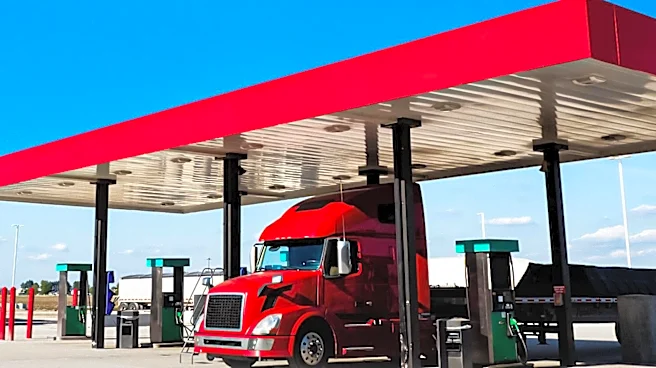
President Bola Tinubu has directed the rollout of 500 additional compressed natural gas (CNG) filling stations across Nigeria. This initiative is part of a broader federal program aiming for a total network of 1,000 CNG stations nationwide. The President's
order is a direct response to the removal of the petrol subsidy, which led to increased transportation costs. The decision was announced after a meeting with the Nigeria Governors’ Forum, where governors agreed to take urgent measures to reduce transportation costs in their respective states. The primary focus will be on expanding CNG-powered transport and electric vehicles, particularly for intra-state transportation. The Midstream and Downstream Gas Infrastructure Fund is already financing over 100 gas projects, including 15 mother and 86 daughter CNG stations, with four projects commissioned in Lagos, Abuja, and Owerri in May.
Why It's Important?
This directive is crucial for mitigating the economic impact of the petrol subsidy removal on Nigerian citizens. By expanding the network of CNG stations, the government aims to provide a more affordable alternative fuel source, thereby reducing transportation costs for both individuals and businesses. CNG-powered vehicles can operate at 60-80% less fuel cost compared to petrol engines, offering significant savings. This initiative is expected to alleviate financial burdens on commuters and transporters, potentially leading to a decrease in passenger fares and the cost of goods. The shift towards CNG and electric vehicles also aligns with broader environmental goals by promoting cleaner energy sources. Furthermore, the project's financing through the Midstream and Downstream Gas Infrastructure Fund highlights a strategic investment in national energy infrastructure, fostering economic stability and growth in the long term.
What's Next?
The federal and state authorities have agreed to establish a joint committee to oversee the implementation of measures aimed at reducing transportation costs. President Tinubu has stated that savings from cheaper alternative energy sources should be reflected in passenger fares starting from October 1. This indicates a clear timeline for the expected impact on public transportation. The rollout of the 500 additional CNG stations will proceed, building on the existing infrastructure and ongoing projects. Efforts will also focus on encouraging the conversion of more vehicles to run on CNG, with over 120,000 vehicles already converted under the Presidential CNG Initiative and an additional 100,000 conversion kits being processed. The joint committee will monitor progress and ensure that the benefits of reduced operating costs are passed on to consumers, thereby achieving the intended objective of alleviating the burden of increased transportation expenses.
Beyond the Headlines
The push for CNG adoption has deeper implications for Nigeria's energy independence and economic diversification. By leveraging its abundant natural gas reserves, Nigeria can reduce its reliance on imported petrol, strengthening its energy security and stabilizing its economy against global oil price fluctuations. This initiative also represents a significant step towards a greener economy, promoting cleaner fuels and reducing carbon emissions from the transportation sector. The development of CNG infrastructure can stimulate local industries, create jobs in installation, maintenance, and vehicle conversion, and foster technological innovation. Long-term, this could position Nigeria as a leader in gas-powered transportation in Africa, attracting further investment and expertise in the sector. The success of this program could serve as a model for other developing nations seeking sustainable and affordable energy solutions.