




What's Happening?
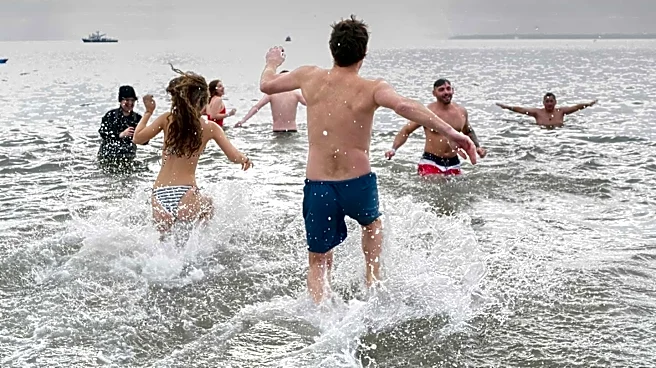
Social wellness clubs are transforming traditional social gatherings by offering group cold plunges and sauna sessions as alternatives to conventional happy hours. Remedy Place, a prominent club in this trend, promotes 'self-care, but made social,' integrating
activities like contrast therapy and guided ice-bath classes into its programming. This shift is moving beyond boutique clubs, with Eventbrite noting a rise in 'soft clubbing' events such as sauna raves and cold-plunge parties. These events incorporate music and crowd energy similar to nightlife but remove alcohol, appealing to a generation re-evaluating traditional social settings. The core idea is to provide a shared activity and a destination that fosters connection and community, making the wellness activity itself the main event rather than a precursor to other plans.
Why It's Important?
This trend signifies a broader cultural shift in how individuals approach social interaction and well-being. By offering 'social substitutions' that prioritize health and connection, these clubs address a growing demand for sobriety-adjacent social options and mindful living. The emphasis on shared experiences in wellness settings can lead to stronger community bonds and improved mental and physical health outcomes for participants. For the hospitality and entertainment industries, this development presents both a challenge and an opportunity. Traditional venues may need to adapt their offerings to compete with these wellness-focused alternatives, while new businesses can emerge to cater to this evolving consumer preference. It also highlights a redefinition of 'going out,' where activities that were once solitary recovery rituals are now becoming central to social planning.
What's Next?
The social wellness club model is expected to expand, moving further into entertainment formats. Eventbrite's observation of sauna raves and cold-plunge parties suggests that promoters are increasingly viewing contrast therapy as a viable anchor for ticketed social events. This could lead to more one-off events in cities with existing bathhouse infrastructure and a testing of ticket prices against traditional bar tabs. Membership clubs are likely to multiply, differentiating themselves through specialized programming, instructors, and cohort-style memberships, resembling boutique fitness studios more than traditional spas. The 'social substitution' framework, which promotes healthier alternatives to happy hour, is anticipated to influence other social activities, potentially leading to hybrid venues that combine workouts with social hangouts, such as run clubs or pickleball leagues. This indicates a continued evolution in how people choose to socialize, prioritizing activity and well-being.
Beyond the Headlines
The rise of social wellness clubs reflects a deeper societal introspection regarding consumption habits and the pursuit of genuine connection. In an era where digital interactions often dominate, these clubs offer tangible, in-person experiences that foster a sense of belonging and shared purpose. This movement challenges the long-standing cultural norm of alcohol-centric socializing, promoting a more health-conscious and intentional approach to leisure. Ethically, it encourages a re-evaluation of what constitutes 'fun' and 'socializing,' potentially leading to a reduction in alcohol-related health issues and a greater emphasis on holistic well-being. Culturally, it could normalize and popularize wellness practices, integrating them more seamlessly into daily social life and shifting perceptions of self-care from an individual chore to a communal activity.