
What's Happening?
Henry Kravis is a co-founder of KKR, a prominent American investment management firm established in 1976. KKR, publicly traded on the New York Stock Exchange, has grown into one of the world's largest
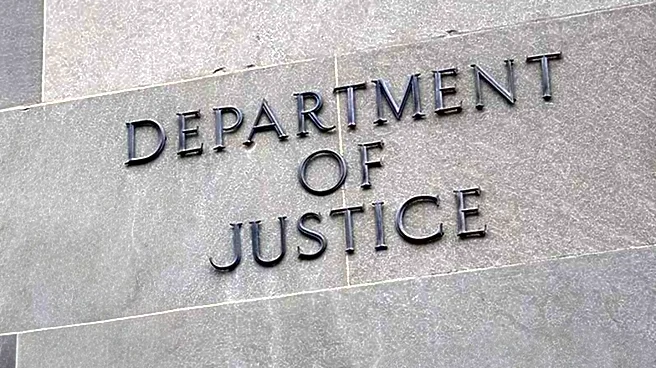
private equity firms. The company recently faced a significant legal challenge in the U.S., agreeing to pay a $250 million fine to the Department of Justice (DOJ) in August 2026. This settlement resolved a lawsuit initiated in January 2025, which accused KKR of violating the Hart-Scott-Rodino Act, a pre-merger notification law, in at least 16 transactions during 2021 and 2022. The DOJ alleged that KKR altered or omitted documents and failed to make necessary notifications, marking this as the largest fine ever imposed under this law. KKR, while disagreeing with the accusations and asserting good faith actions, stated that external law firms would reimburse the fine. Concurrently, in October 2026, the European Commission formally accused KKR of providing misleading information during the approval process for its €22 billion acquisition of NetCo, TIM's fixed network, which concluded in 2024. KKR denies any wrongdoing and plans to contest these allegations.
Why It's Important?
The DOJ's record-setting fine against KKR underscores the U.S. government's intensified scrutiny of compliance with antitrust regulations, particularly the Hart-Scott-Rodino Act. This action signals a stricter enforcement environment for large investment firms engaged in mergers and acquisitions, potentially leading to increased due diligence requirements and compliance costs across the private equity industry. The substantial penalty could serve as a deterrent for other firms considering similar practices, aiming to ensure fair competition and transparency in market consolidations. For KKR, despite the reimbursement from external law firms, the fine and the associated legal proceedings could impact its reputation and operational focus. Simultaneously, the European Commission's accusations highlight growing regulatory challenges for global investment firms operating across multiple jurisdictions. Such international scrutiny can complicate cross-border deals, potentially delaying or even derailing significant investments, and emphasizes the need for meticulous adherence to diverse regulatory frameworks. These developments collectively indicate a tightening regulatory landscape for major financial players, impacting their strategic decisions and operational conduct both domestically and internationally.
What's Next?
Following the DOJ settlement, KKR will likely face enhanced scrutiny from U.S. regulatory bodies regarding its future merger and acquisition activities. The firm may implement more stringent internal compliance protocols and increase its legal oversight to prevent further violations of the Hart-Scott-Rodino Act. This could involve more rigorous pre-merger notification processes and a re-evaluation of how transaction documents are managed and disclosed. The European Commission's formal accusation regarding the NetCo acquisition means KKR will engage in a legal battle to contest the allegations of misleading information. This process could involve extensive legal proceedings, potentially leading to further fines or other punitive measures if the Commission's claims are substantiated. The outcome of this European investigation could influence KKR's future investment strategies in the EU, potentially leading to more cautious approaches in large-scale European acquisitions. Both regulatory challenges could prompt KKR to review its global compliance frameworks and potentially adjust its operational strategies to navigate an increasingly complex and demanding regulatory environment.
Beyond the Headlines
The dual regulatory challenges faced by KKR—a record U.S. fine and European Commission accusations—point to a broader trend of increased governmental oversight on large private equity firms. This trend reflects growing concerns about market concentration, potential anti-competitive practices, and the transparency of complex financial transactions. The DOJ's emphasis on the Hart-Scott-Rodino Act suggests a focus on ensuring that large firms do not bypass regulatory review, which is crucial for maintaining competitive markets and protecting consumer interests. The European Commission's actions, on the other hand, highlight the complexities of cross-border regulatory harmonization and the potential for differing interpretations of disclosure requirements. These cases could set precedents for how global investment firms are held accountable across various jurisdictions, potentially leading to a more integrated, albeit more demanding, international regulatory landscape. The long-term implications could include a shift in private equity strategies, with firms prioritizing regulatory compliance as a core component of their investment thesis, potentially influencing deal structures, timelines, and overall risk assessments in the global financial market.