








What's Happening?
Joby Aviation and Toyota Motor have announced a joint venture aimed at producing Joby's S4 series air taxis. This collaboration, named the Joby Toyota Aero Manufacturing Preparation Company (JTAMPC), will leverage Joby's expertise in electric aviation
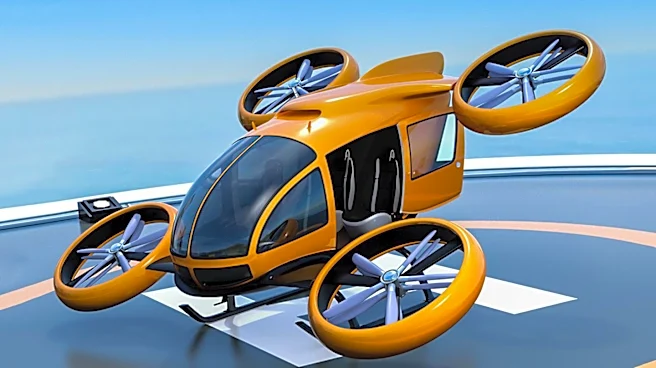
and Toyota's proficiency in production systems. The venture is focused on establishing the groundwork for commercial production, enhancing manufacturing quality, and reducing costs. Toyota will hold a 51% stake in JTAMPC, while Joby will own 49%. The board will consist of three directors from Toyota and two from Joby. JTAMPC will have an exclusive license to produce the S4 series and access to related intellectual property without royalty costs. The S4 aircraft, designed to seat a pilot and four passengers, features six rotors for vertical takeoff and landing, transitioning to level flight like a conventional plane.
Why It's Important?
The joint venture between Joby and Toyota represents a significant step forward in the commercialization of electric vertical takeoff and landing (eVTOL) aircraft. As urban areas seek faster and more sustainable transportation solutions, the demand for air taxis is expected to grow. This partnership could accelerate the development and deployment of eVTOL technology, potentially transforming urban mobility. By combining Joby's innovative aircraft design with Toyota's manufacturing expertise, the venture aims to streamline production processes and reduce costs, making air taxis more accessible. This could lead to a new era of urban transportation, reducing congestion and emissions in cities.
What's Next?
The next steps for the Joby Toyota Aero Manufacturing Preparation Company involve scaling up production capabilities to meet anticipated demand and securing necessary government approvals for commercial deployment. The focus will be on achieving aircraft certification and expanding production capacity. As the venture progresses, it may influence regulatory frameworks and urban planning strategies to accommodate air taxi services. Stakeholders, including city planners and transportation authorities, will likely monitor developments closely to integrate this new mode of transport into existing infrastructure.