









What's Happening?
The Organisation for Economic Co-operation and Development (OECD) has revised its projections for South Korea's potential growth rate downwards. In June, the OECD estimated South Korea's potential growth at 1.66 percent for the current year and 1.52 percent for the next
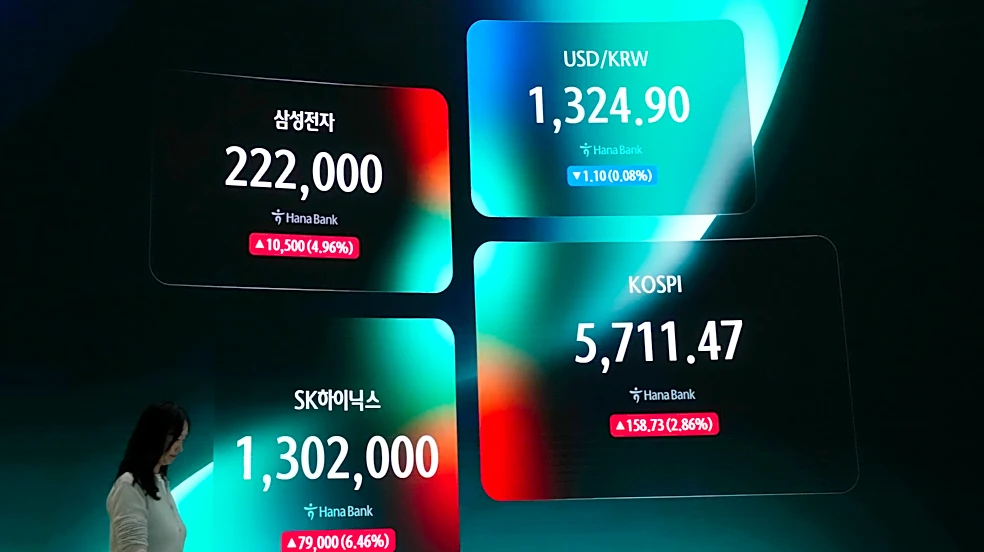
year. This reduction is attributed to several factors, including a decline in the working-age population, a decrease in investment, and stagnant productivity. These concerns come as South Korea's economy shows signs of increasing reliance on its semiconductor sector for growth, mirroring trends seen in Taiwan. While semiconductor exports have surged due to AI demand, there are warnings that economic gains might be concentrated in a few large companies, potentially widening the gap between macroeconomic indicators and the public's economic experience. The Korea Development Institute also warned that structural problems could emerge post-semiconductor supercycle, potentially leading to negative growth after 2030.
Why It's Important?
The OECD's revised growth forecast highlights underlying structural issues within South Korea's economy, despite a booming semiconductor industry. A declining working-age population and stagnant productivity can lead to long-term economic challenges, impacting national income, social welfare systems, and overall economic competitiveness. The increasing concentration of economic growth in the semiconductor sector raises concerns about economic diversification and resilience. If growth benefits are not broadly distributed, it could exacerbate income inequality and lead to a disconnect between national economic performance and the financial well-being of the general populace. This situation could also make the economy vulnerable to downturns in the semiconductor market, potentially leading to a more severe economic impact if other sectors are not robust enough to compensate.
What's Next?
South Korea faces the challenge of addressing its demographic shifts, boosting investment across various sectors, and improving productivity to mitigate the risks highlighted by the OECD. The nation's ability to translate its semiconductor export gains into broader economic investment, particularly in non-semiconductor industries like automobiles, shipbuilding, and batteries, and into domestic consumption, will be crucial. Failure to diversify could lead South Korea down a path similar to Taiwan, where a strong semiconductor sector coexists with a slump in domestic demand and stagnant real wage growth. Policymakers may need to implement strategies to encourage investment beyond the tech giants and foster an environment that supports broader economic participation and innovation to ensure sustainable and inclusive growth.
Beyond the Headlines
The situation in South Korea underscores a broader global economic challenge where technological advancements, while driving growth in specific sectors, can also create imbalances if not managed effectively. The reliance on a single industry, even a high-growth one like semiconductors, can mask underlying structural weaknesses and create a dual economy where a few prosper while others struggle. This raises questions about the long-term sustainability of such growth models and the need for governments to proactively foster diversification and inclusive economic policies. The demographic challenge of a declining working-age population is also a significant long-term issue that many developed nations face, requiring comprehensive policy responses related to labor force participation, automation, and immigration to maintain economic vitality.