






What's Happening?
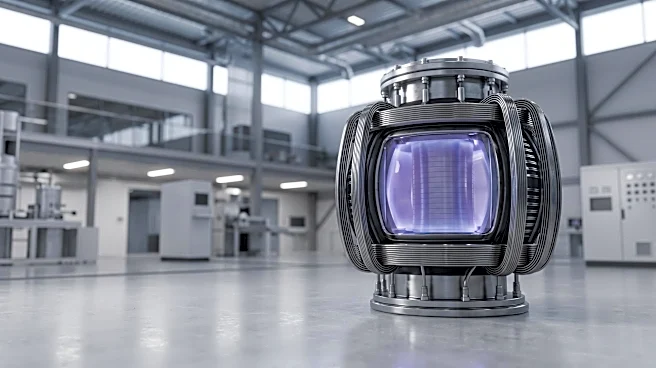
NANO Nuclear Energy Inc., an advanced nuclear micro modular reactor company, has announced significant progress in the development of its KRONOS MMR™ Energy System. The primary helium circulator, a critical component responsible for circulating helium coolant
to transfer heat within the reactor core, has moved into the detailed design phase. This advancement is a result of an ongoing engineering collaboration with Howden, a Baker Hughes Business, which specializes in air and gas handling products. Howden is leveraging its extensive experience in helium turbomachinery and high-temperature gas-cooled reactor technology to design the circulator, ensuring it meets the performance requirements of the KRONOS MMR™ system. This milestone follows the completion of key engineering evaluations, detailed 3D design models, supporting analyses, and formal design reviews between the two companies. The collaboration aims to enhance the overall plant efficiency, thermal performance, and long-term operational reliability of the KRONOS MMR™.
Why It's Important?
This development is crucial for the commercialization of advanced nuclear microreactors in the U.S. The KRONOS MMR™ Energy System represents a step forward in clean energy solutions, offering portable and on-demand nuclear power. The successful progression of the helium circulator to detailed design strengthens the technical foundation of the reactor program, increasing confidence in its performance, manufacturability, and integration. For the U.S. energy sector, this signifies potential for diversified power generation, especially for applications requiring compact and efficient energy sources. The involvement of companies like Howden, with its specialized expertise, underscores the collaborative effort required to bring such advanced technologies to market. This progress could pave the way for future deployments of microreactors, contributing to energy independence and decarbonization goals.
What's Next?
NANO Nuclear Energy and Howden will continue their engineering activities, which include component qualification, materials and performance testing, further design optimization, and manufacturing planning for the primary helium circulator. This ongoing work is essential for preparing the KRONOS MMR™ for prototype construction, regulatory licensing, and eventual deployment. James Walker, CEO of NANO Nuclear Energy, emphasized the disciplined engineering execution required for successful commercialization. The company is also engaged in pre-application discussions with the U.S. Nuclear Regulatory Commission (NRC) for a construction permit, in collaboration with the University of Illinois Urbana-Champaign. Future steps will involve securing regulatory approvals and scaling up manufacturing capabilities to support commercial deployment.
Beyond the Headlines
The advancement of microreactor technology, as exemplified by the KRONOS MMR™, has broader implications for energy infrastructure and national security. These compact reactors offer flexibility in deployment, potentially serving remote communities, industrial zones, or even disaster relief efforts where traditional power grids are impractical or unavailable. The focus on robust engineering and strategic partnerships with experienced suppliers like Howden highlights a commitment to safety and reliability, which are paramount in the nuclear industry. Furthermore, the development of such systems could reduce reliance on fossil fuels, contributing to environmental sustainability. The long-term success of these microreactors could also stimulate growth in the domestic nuclear supply chain and create high-skilled jobs, reinforcing the U.S.'s leadership in advanced nuclear technology.