







What's Happening?
The global financial system is undergoing a significant transformation, moving towards a more multipolar structure. This shift is characterized by increasingly complex and fragmented capital flows, departing from a previously more open and predictable
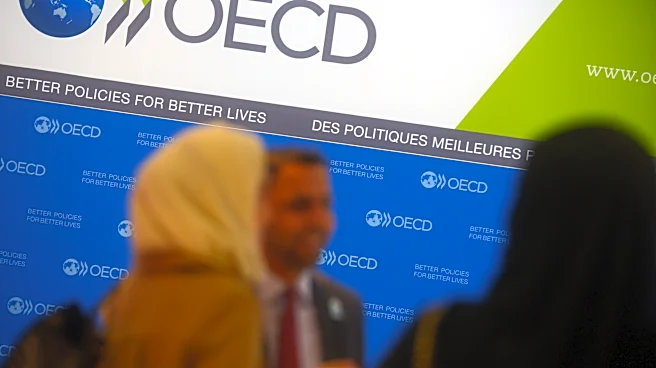
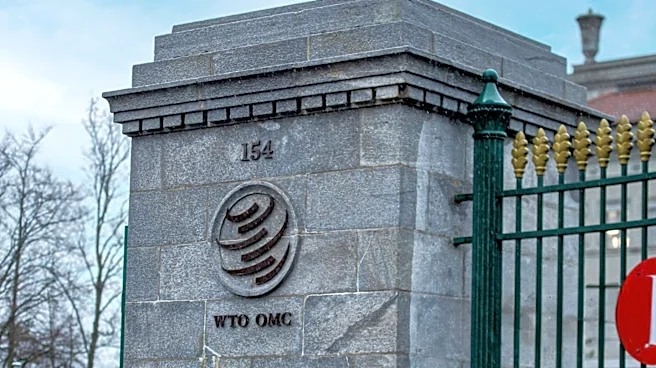
era. The OECD has cautioned that geopolitical fragmentation could weaken cross-border financial relationships, leading financial institutions to exercise greater caution in their market and international relationship choices. This policy environment directly impacts businesses operating globally. Recent analysis from the IMF indicates that trade flows are already adjusting, with diversions to third countries as the global economy becomes more fragmented. This trend suggests that the advantage will increasingly lie with financial hubs and institutions capable of maintaining confident and continuous capital movement in this evolving landscape. The WTO reported that the value of global merchandise trade affected by new tariffs and trade-related measures reached $2.73 trillion between mid-October 2024 and mid-May 2025, a more than threefold increase from the previous period.
Why It's Important?
This transition to a multipolar financial system has profound implications for U.S. industries, businesses, and economic stakeholders. The increased complexity and fragmentation of capital flows necessitate a re-evaluation of international investment strategies and risk management. U.S. companies engaged in global trade and investment will face a more challenging environment, requiring them to adapt to changing trade routes, funding needs, and treasury demands. The redirection of trade, such as Chinese exports shifting towards Europe and Southeast Asia, directly impacts the financial structures supporting these trade relationships, including funding, foreign exchange exposure, treasury, and liquidity management. Financial hubs and global banking networks will become even more critical in facilitating these complex flows, offering legal frameworks and operational continuity across multiple markets. U.S. financial institutions and corporations will need to enhance their capabilities in managing cross-border payments, liquidity, and foreign exchange in a 24/7, real-time operating rhythm to remain competitive and resilient.
What's Next?
Businesses and investors will need to prioritize understanding and navigating this more complex global system. The focus will shift from simply maximizing capital movement to ensuring capital can move with sufficient confidence and control to support expansion, investment, and daily operations. Financial institutions will play an increasingly vital role in connecting markets and facilitating these flows. U.S. policymakers may need to consider how to support American businesses in adapting to this fragmented environment, potentially through new trade agreements, financial regulations, or diplomatic efforts to ensure stable and predictable capital movement. The ongoing adjustments in trade routes and financial structures will likely continue, requiring continuous monitoring and strategic adaptation from all stakeholders. The ability of markets to attract long-term investment will increasingly depend on their perceived dependability and their capacity to facilitate reliable capital movement.
Beyond the Headlines
The shift to a multipolar financial world extends beyond immediate economic impacts, touching upon deeper geopolitical and strategic considerations. The fragmentation of financial relationships could lead to a re-evaluation of global economic alliances and dependencies. Nations and economic blocs may increasingly prioritize strategic autonomy, seeking to diversify their financial partnerships and reduce reliance on any single dominant power. This could foster the emergence of new financial centers and regional economic blocs, potentially altering the balance of global economic influence. The ethical and legal dimensions of cross-border financial relationships will also become more prominent, as different jurisdictions may impose varying regulatory frameworks and compliance requirements. Ultimately, this evolution could lead to a more decentralized and potentially less interconnected global economy, challenging established norms and requiring innovative approaches to international cooperation and governance.