






What's Happening?
Faraday Copper Corp. has finalized the acquisition of the San Manuel project from a wholly-owned subsidiary of BHP Group Limited. This acquisition merges the San Manuel project with Faraday's existing Copper Creek project, both located in Arizona, to
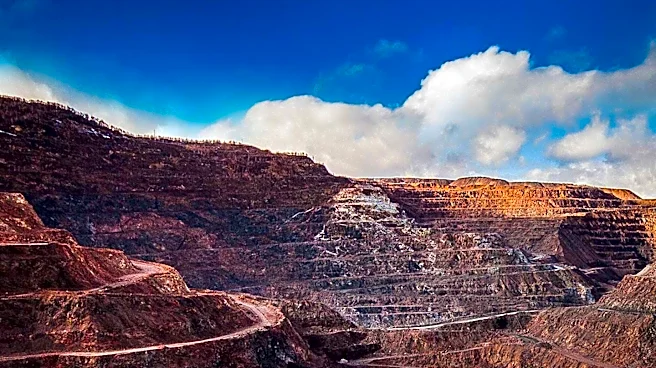
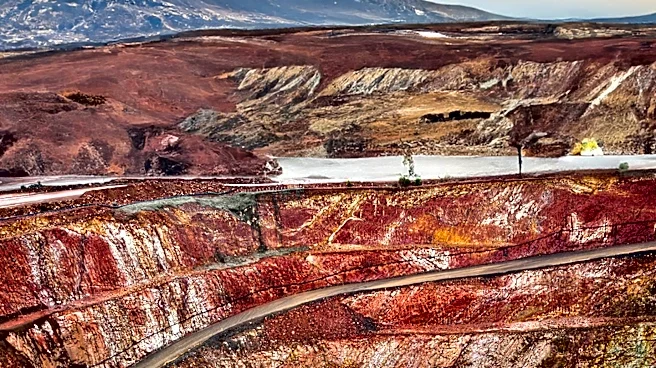
establish the Redhawk Copper Complex. Paul Harbidge, President and CEO of Faraday, stated that this marks a significant milestone, creating one of the largest undeveloped copper districts in the United States. The San Manuel project previously operated as a combined underground block cave and open-pit mine, producing over 4.2 million tonnes of copper between 1955 and 1999. The mineralization at San Manuel and Kalamazoo is well-understood, with sulphide mineralization in porphyry intrusives and Oracle granite, and supergene (oxide) mineralization formed later. The Kalamazoo deposit is an extension of mineralization offset along the San Manuel fault. Faraday plans an initial 24,000-meter drilling program at the San Manuel project to confirm historical resource estimates and gather modern technical data for future economic studies. In connection with the acquisition, Elaina Ware and Dominic Perrottet from BHP have been appointed to Faraday's Board of Directors.
Why It's Important?
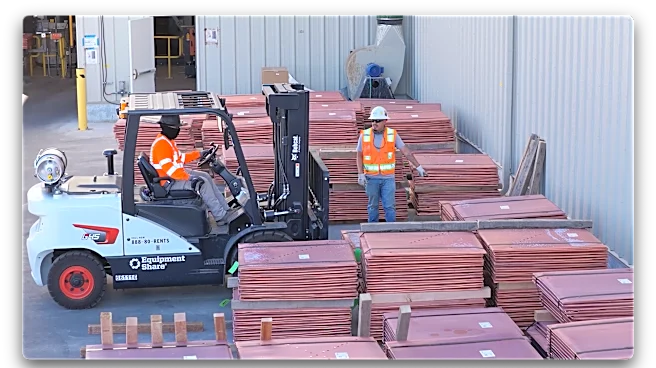
The formation of the Redhawk Copper Complex is strategically important for the U.S. copper industry, as it aims to deliver a multi-decade source of domestic copper. This initiative aligns with efforts to strengthen domestic supply chains for critical minerals. The project leverages approximately 27,000 acres of private land at San Manuel, which could facilitate expedited copper cathode production and reduce environmental footprints by utilizing existing infrastructure and brownfield sites. BHP's significant investment, holding approximately 32.0% of Faraday's common shares, underscores the project's potential and provides substantial backing. The focus on copper cathode production, followed by open-pit sulphides and then underground operations, suggests a phased approach to maximize efficiency and accelerate production. This development could reduce U.S. reliance on foreign copper sources, impacting national security and economic stability, particularly in sectors requiring large amounts of copper, such as renewable energy and electric vehicles.
What's Next?
Faraday Copper is set to commence a 24,000-meter drilling program at the San Manuel project in the coming days. The primary goal of this program is to confirm historical Mineral Resource Estimates at the San Manuel and Kalamazoo deposits and to obtain multi-element and mineralogical datasets. These data will be crucial for evaluating potential credit elements like silver and gold, and for providing samples for metallurgical test work and geotechnical data for future studies. Mineral Resource Estimates for both the Copper Creek and San Manuel projects are expected by mid-2027. Following this, a Phase I Prefeasibility Study is anticipated in 2028, focusing on copper cathode and open-pit copper sulphide production. A subsequent Phase II study will explore production from underground mineralization. These steps are designed to provide an expedited pathway to initial copper cathode production, with the ultimate aim of establishing a leading copper complex in the U.S.
Beyond the Headlines
The Redhawk Copper Complex represents a broader trend towards securing domestic supplies of critical minerals, which has significant implications for U.S. industrial policy and national security. The project's emphasis on utilizing existing infrastructure and brownfield sites for future facilities highlights a commitment to sustainable mining practices and reduced environmental impact, which could set a precedent for future mining operations. The historical context of the San Manuel mine, one of the largest underground mines in the USA, adds a layer of legacy and potential for revitalization of a historically significant mining region. The involvement of BHP, a major global mining company, as a strategic investor, also signals confidence in the long-term viability and strategic importance of this U.S. copper asset. This could influence investment patterns in the U.S. mining sector and foster technological advancements in copper extraction and processing.