







What's Happening?
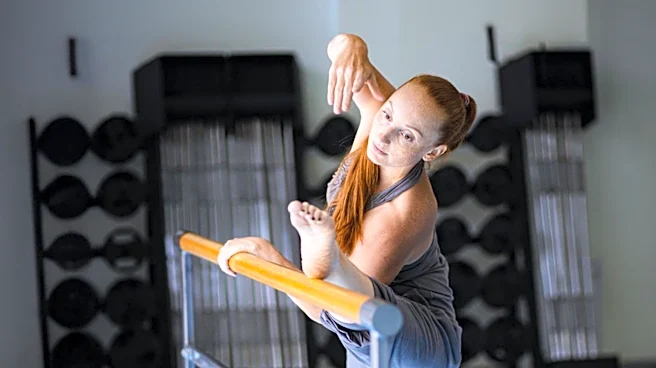
Angela Rippon, an 81-year-old broadcaster and former ballet dancer, emphasizes the importance of daily stretching and ballet exercises to maintain strength and mobility as she ages. Rippon incorporates pliés into her morning routine, a simple ballet move
that enhances balance, posture, and core strength. She also stresses the significance of stretching, likening it to a cat's natural behavior after rest. Research supports her practices, with studies indicating that ballet-inspired movements can improve lower-body strength and flexibility, which are crucial for maintaining independence in older age. Additionally, a study in the Scandinavian Journal of Medicine & Science in Sports links greater flexibility with a reduced risk of early death.
Why It's Important?
Rippon's routine highlights the broader significance of incorporating flexibility and strength exercises into daily life, especially for older adults. As the population ages, maintaining mobility and independence becomes increasingly important. Her practices, supported by scientific research, suggest that simple, consistent exercises can significantly impact longevity and quality of life. This approach could influence public health recommendations and encourage more older adults to engage in regular physical activity, potentially reducing healthcare costs associated with age-related mobility issues.
What's Next?
As awareness of the benefits of stretching and mobility exercises grows, there may be increased interest in developing programs tailored for older adults. Fitness and health organizations could expand offerings to include more ballet-inspired and flexibility-focused classes. Additionally, healthcare providers might begin to recommend such routines as part of preventive care for aging populations. This shift could lead to broader societal changes in how aging and physical activity are perceived, promoting a more active lifestyle among seniors.
Beyond the Headlines
The emphasis on stretching and mobility exercises also touches on cultural perceptions of aging and physical activity. Rippon's advocacy challenges stereotypes about aging, demonstrating that older adults can remain active and independent. This perspective could inspire a cultural shift towards valuing and supporting active aging, influencing everything from urban planning to healthcare policy. As more people adopt these practices, there may be a long-term impact on how society supports and engages with its aging population.