






What's Happening?
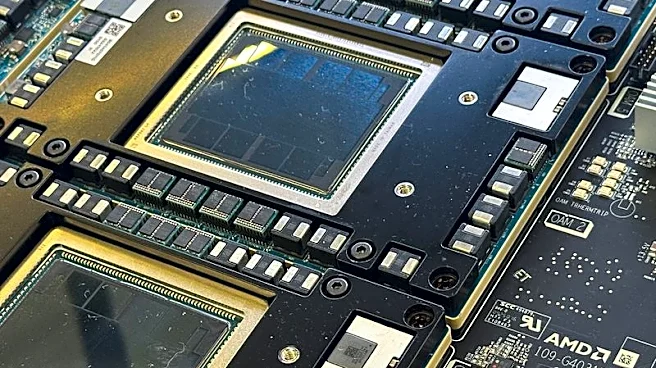
SambaNova Systems and Super Micro Computer are collaborating to build AI inference systems that will incorporate 10,000 of SambaNova’s SN50 chips. The SN50, launched in February 2026, is SambaNova’s latest Reconfigurable Dataflow Unit (RDU), designed
for AI inference tasks. SambaNova claims the SN50 offers up to five times greater speed and three times lower total cost of ownership compared to Nvidia’s B200 GPUs. Initial deployments of SN50 systems are planned for the second half of 2026, with SoftBank lined up for deployments in Japan. SambaNova also has a multi-year collaboration with Intel to integrate with Intel’s Xeon processors and has received over $350 million in a Series E funding round in February 2026, with Intel Capital as a participant.
Why It's Important?
This partnership between SambaNova and Super Micro Computer signifies a major push in the AI inference market, directly challenging established players like Nvidia. For the U.S. technology sector, this development is crucial as it could intensify competition in the high-performance AI chip market, potentially leading to more innovation and cost-effective solutions for businesses. The integration with Intel’s Xeon processors and Intel Capital’s investment highlight a strategic alignment aimed at strengthening the ecosystem for SambaNova’s technology. This could benefit U.S. data centers and cloud providers by offering alternative, potentially more efficient, hardware for AI workloads. The success of SN50 deployments could influence procurement decisions for AI infrastructure across various U.S. industries, impacting both hardware manufacturers and AI-driven service providers.
What's Next?
The deployment of 10,000 SN50 chips in AI inference systems is expected to begin in the second half of 2026. The market will closely watch the performance and adoption of these systems, particularly in comparison to Nvidia’s offerings. If SambaNova’s claims of superior speed and lower cost of ownership prove accurate in real-world applications, it could significantly disrupt the AI hardware market. This could lead to increased demand for SambaNova’s chips and potentially influence other hardware manufacturers to accelerate their own AI-focused chip development. The collaboration with Intel and Oracle Cloud Infrastructure suggests a broader strategy to integrate SambaNova’s technology into existing enterprise and cloud ecosystems, which will be a key factor in its market penetration and long-term success.
Beyond the Headlines
The aggressive claims by SambaNova regarding the SN50’s performance against Nvidia’s B200 GPUs underscore the intense competition and rapid innovation occurring in the AI chip sector. This rivalry is not just about market share but also about shaping the future architecture of AI computing. A successful deployment of SambaNova’s chips could democratize access to high-performance AI inference, making advanced AI capabilities more accessible and affordable for a wider range of businesses, including smaller enterprises and startups in the U.S. This could accelerate the adoption of AI across various industries, fostering new applications and services. Conversely, if the SN50 fails to meet expectations, it could reinforce the dominance of current market leaders and slow down the diversification of AI hardware options.