
What's Happening?
The retail technology industry is undergoing a significant digital revolution, with innovative solutions reshaping traditional supply chain dynamics. Key advancements include the use of advanced analytics
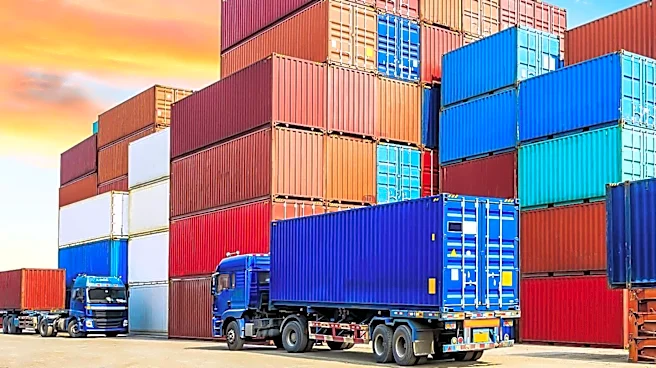
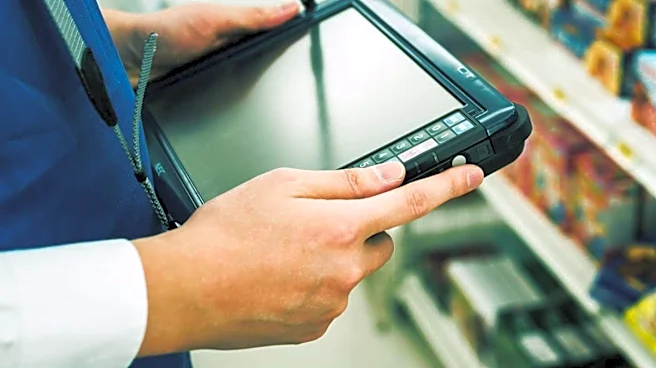
and machine learning for demand forecasting, enabling retailers to optimize stock levels and anticipate consumer preferences. Intelligent inventory management systems, powered by automation and predictive analytics, reduce carrying costs and ensure product availability. Collaborative digital platforms are enhancing supplier communication, fostering real-time alignment on demand fluctuations and delivery schedules. Last-mile delivery is being transformed through smart routing algorithms, crowdsourced options, and the potential integration of drones and autonomous vehicles. Warehouse operations are being revolutionized by AI-powered robots for picking, packing, and sorting, while blockchain technology is improving supply chain transparency and traceability. Real-time visibility is achieved through IoT sensors, monitoring product location and condition, and augmented reality (AR) and virtual reality (VR) are blurring the lines between physical and digital retail experiences.
Why It's Important?
These technological advancements are crucial for the U.S. retail sector's competitiveness and efficiency. By optimizing demand forecasting and inventory management, retailers can significantly reduce waste and operational costs, leading to improved profitability. Enhanced supply chain transparency and traceability, particularly through blockchain, build consumer trust and can help mitigate issues like product recalls or counterfeiting. The transformation of last-mile delivery addresses the growing consumer expectation for fast and convenient shipping, which is vital for e-commerce success. Warehouse automation and robotics increase operational efficiency and reduce human error, allowing retailers to meet high demand. Ultimately, these innovations enable retailers to create more personalized and seamless shopping experiences, fostering customer loyalty and driving sales in an increasingly competitive market. Retailers that fail to adapt risk falling behind in efficiency, customer satisfaction, and market share.
What's Next?
The retail tech industry is expected to continue its rapid evolution, with further integration of AI, IoT, AR, and VR across all facets of the supply chain and customer experience. Retailers will likely focus on refining data-driven insights to achieve even greater personalization and predictive capabilities. The adoption of sustainable practices, such as eco-friendly packaging and optimized transportation routes, will become more prevalent as environmental concerns take center stage. Investment in robust risk management strategies, including dual sourcing and contingency planning, will be critical to ensure supply chain resilience against disruptions. The ongoing challenge will be to effectively integrate these diverse technologies into a cohesive system that not only drives efficiency but also enhances the overall customer journey, from product discovery to post-purchase support. Continuous adaptation to emerging trends will be key for retailers to maintain a competitive edge.
Beyond the Headlines
The digital revolution in retail tech signifies a fundamental shift in how goods are produced, distributed, and consumed, moving towards a highly interconnected and intelligent ecosystem. This transformation raises deeper questions about the future of work, as automation and robotics redefine roles within warehouses and logistics. The emphasis on customer-centricity and personalization, while beneficial for consumers, also brings ethical considerations regarding data privacy and the potential for algorithmic bias in tailored offerings. The blurring of physical and digital retail environments through AR and VR could fundamentally alter consumer behavior and expectations, creating new forms of engagement and commerce. Moreover, the push for supply chain transparency and sustainability reflects a broader societal demand for ethical consumption and corporate responsibility, influencing not just business practices but also consumer values and brand loyalty in the long term.