




What's Happening?
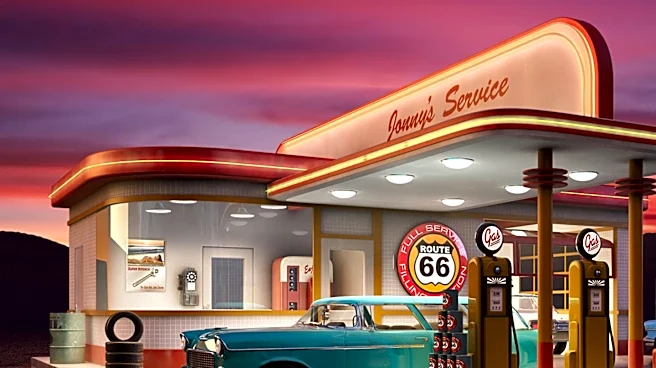
Neon signs, once a ubiquitous feature of Route 66, are experiencing a modern resurgence, continuing to be a major part of the road's visual iconography. These vibrant signs, which first appeared in the U.S. in the 1920s and became an institution from
the 1930s to the 1950s, served as crucial navigational and advertising tools for travelers before the advent of digital maps. Many signs along Route 66 incorporated local cultures and mythologies, featuring imagery like thunderbirds, saguaro cacti, and rearing cowboys. While neon declined in popularity in the 1960s due to the rise of LED lighting and concerns about lead, interest in neon art has re-emerged, leading to the preservation and restoration of many historic signs, particularly in areas like downtown Albuquerque.
Why It's Important?
The renewed interest in neon signs on Route 66 highlights a broader cultural appreciation for American history and nostalgia. Route 66 itself holds a unique place in the American imagination, symbolizing individualism, freedom, and the allure of the American West, as popularized by works like John Steinbeck's 'The Grapes of Wrath' and Nat King Cole's song 'Route 66.' The preservation of these signs is important for maintaining the historical integrity and unique aesthetic of the 'Mother Road,' attracting tourism and supporting local economies that thrive on this heritage. It also reflects a trend of valuing tangible historical artifacts in an increasingly digital world, offering a physical connection to a bygone era of American travel and commerce.
What's Next?
The ongoing resurgence of neon signs suggests a continued effort in historical preservation and cultural tourism along Route 66. This could lead to more restoration projects, the establishment of additional neon museums, and increased funding for maintaining these iconic landmarks. Local communities along the route may further leverage this nostalgia to develop unique attractions and events, drawing more visitors and fostering economic growth. The trend also indicates a potential for contemporary artists and businesses to incorporate neon into new designs, blending historical aesthetics with modern applications, ensuring that the art form remains relevant and continues to evolve.
Beyond the Headlines
The enduring appeal of neon signs on Route 66 speaks to a deeper human connection with light, color, and storytelling. Beyond their practical function, these signs became symbols of hope, opportunity, and adventure for travelers, particularly during challenging times like the Great Depression. Their current revival can be seen as a collective yearning for simpler times or a romanticized past, offering a sense of continuity and identity in a rapidly changing world. The interplay between light and landscape, particularly in the desert night, creates a unique sensory experience that transcends mere advertising, becoming an integral part of the American cultural narrative and a testament to the power of visual communication.